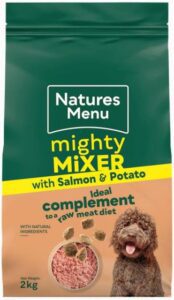
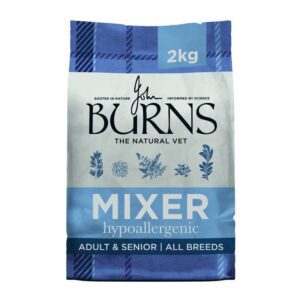
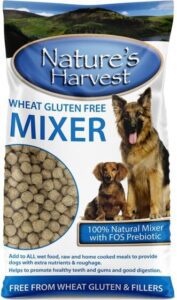
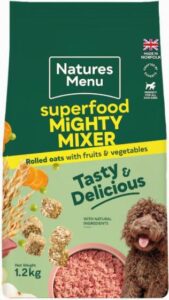
Natures MenuNatures Menu Superfood Mighty Mixer
Mixer
10% meat
- NaturalNo artificial colours, flavours or preservatives.
A mixer's job is exactly what the name says: it goes alongside wet or raw food to add crunch, bulk and cheaper calories - it is not a meal on its own. Mixers are 'complementary' foods, which is the legal way of saying nutritionally incomplete. Fed solo over time they will leave gaps, so the golden rule of the whole category is simple: mixer plus something complete, always.
Dog food mixers
44/100
average ODF Score
Top score 75/100 - Natures Menu Superfood Mighty Mixer
13 foods
Judged on their own terms, mixers vary more than you might expect. The traditional versions are essentially baked cereal - fine as ballast, nothing more - while newer ones add named meats, vegetables or herbs and start earning their place in the bowl on merit. Price per kilo is usually low across the board, which is precisely the appeal: stretch an expensive wet or raw food without letting the daily cost run away.
Do the sums on the full bowl, not the bag. If a cheap mixer lets you afford a better wet food, that can be a genuinely smart trade. Every mixer below comes with its full ingredient breakdown, so you can see which ones bring more than crunch.
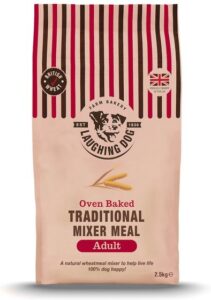
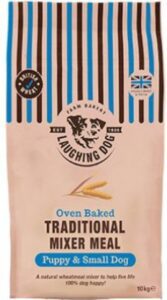
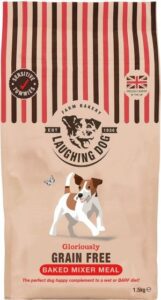
A complementary biscuit designed to be fed alongside wet or raw food - it adds crunch, bulk and cheap calories to a bowl built around something else. 'Complementary' is the key word: a mixer is not nutritionally complete, so it partners a complete food rather than replacing one. Traditional mixers are baked cereal; newer ones add meat and vegetables.
Not as their regular diet. Mixers are legally 'complementary' foods, which means they do not meet a dog's full nutritional needs - fed solo over time they leave gaps. The occasional mixer-only bowl will not hurt a healthy adult dog, but the everyday pattern should be mixer plus a complete wet, raw or fresh food.
Economics and texture. A cheap mixer stretches a more expensive wet or raw food, cutting the cost of the overall bowl while adding the crunch some dogs enjoy. Used that way it can be a smart trade: the complete food carries the nutrition, the mixer carries the volume. Just count its calories when portioning, or the maths becomes overfeeding.
Go deeper on the topics behind this page.
 Best British dog food: the live rankingWhich UK-made dog foods actually score highest? The live British
ranking from our open ODF Score - brands, recipes and budget picks, updating
themselves as we rate more foods.Read the guide
Best British dog food: the live rankingWhich UK-made dog foods actually score highest? The live British
ranking from our open ODF Score - brands, recipes and budget picks, updating
themselves as we rate more foods.Read the guide How to switch your dog’s food without upsetting their stomachThe 7-day transition, what normal looks like on day three, and when to stop. Most "this food upset my dog" is actually a rushed changeover.Read the guide
 Puppy feeding guide: how much, how often, and when to switchHow much to feed a puppy, how often, when to move to adult food - and the one mistake that can permanently damage a large-breed dog.Read the guide
 How much does it really cost to feed a dog?The gap between the cheapest and priciest way to feed the same dog is 72x - and 62 foods score 80+ for under a pound a day. The real numbers.Read the guide