
How much does it really cost to feed a dog?
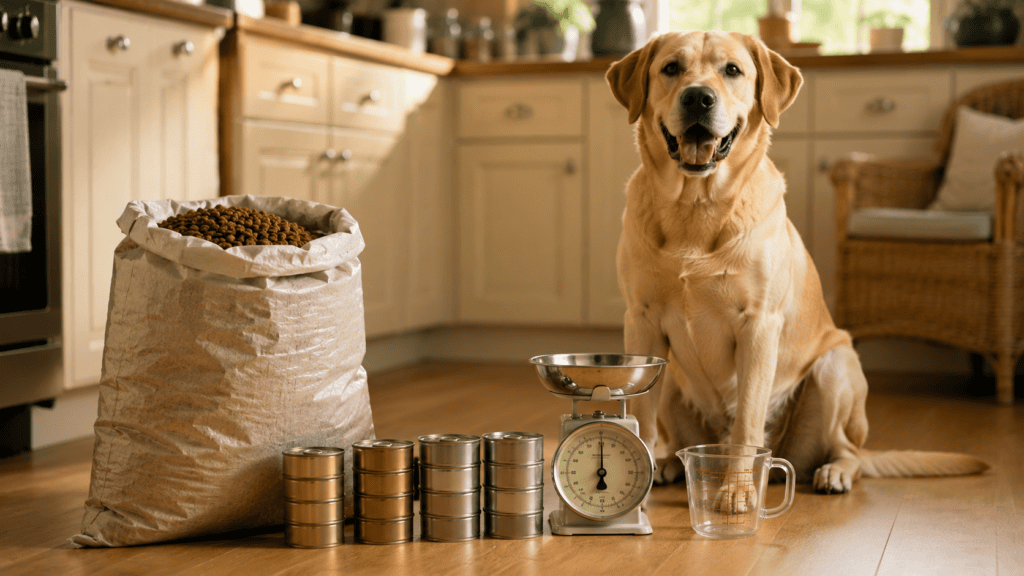
We hold a modelled cost per day for nearly three thousand dog foods (checked August 2026). The cheapest works out at 16p a day. The dearest is nearly £19. That is more than a hundred-fold difference for feeding the same dog - and the expensive end is not a hundred times better.
The headline numbers
For a reference adult dog, across every food we can price:
- Median: about £1.16 a day - roughly £35 a month, or £423 a year.
- Cheapest: 16p a day (£58 a year). Currently £0.12 on the live directory.
- Most expensive: nearly £19 a day - close to £6,900 a year.
- One in ten foods costs more than £5 a day.
The live snapshot, straight from the price data - it updates itself as prices move:
Dog food cost per day
Typical figures from our live data - most are approximate, from the manufacturer's RRP.
Over a twelve-year life, the difference between the median food and a top-decile one is well over £17,000. That is not a rounding error in a household budget.
The number that actually matters
168 foods score 80 or above and cost under £1 a day (checked August 2026).
That is the finding worth taking away. Feeding well is not gated behind a premium price. There is a real floor - the very cheapest foods do score badly, and consistently - but it sits a long way below what most brands would like you to spend.
Above roughly £2 a day, the relationship between price and our score falls apart almost entirely. You are paying for format, convenience, packaging and brand rather than for a better ingredient list.
Cost by food type
Median cost per day, same reference dog:
- Dry: £0.89
- Cold-pressed: £1.22
- Raw: £2.83
- Air-dried: £3.73
- Wet: £4.11
- Fresh-cooked: £4.49
- Freeze-dried: £6.03
Dry food is the cheapest way to feed a dog properly, by a wide margin, and there is no close second. Wet costs four to five times as much, mostly because you are paying to ship water - wet food is roughly 75-80% moisture by weight. Our wet vs dry guide goes deeper on that trade-off.
Freeze-dried and fresh-cooked sit at the top because you are paying for premium meat with the convenience engineered in - in freeze-dried’s case, the water is removed after you have already paid for it. They score very well, and they are a genuine luxury.
Why our per-day figure is not just price per kilo
A kilogram of wet food and a kilogram of kibble do not feed a dog for the same length of time, so comparing price per kilo makes wet look far better value than it is.
We work out how energy-dense each food is, calculate how much a reference dog would actually eat to hit its daily calorie needs, and price that. It is the only way to put a tin and a sack on the same axis.
Where the money actually leaks
Before switching food to save money, check the things that cost more than most people realise:
- Overfeeding. The single biggest one. Feeding 20% over the correct portion adds 20% to the bill and takes years off the dog. Weigh the food; do not use a mug.
- Treats. Frequently 10-20% of daily calories and almost never counted in the food budget.
- Small bags. The convenience premium on a 2kg bag over a 12kg one is often 40% or more per kilo.
- Subscriptions you have stopped comparing. Introductory pricing rarely survives year two.
Fix the portion size first. It is free, it usually saves more than switching brand, and it is better for the dog. The feeding calculator will tell you the right amount in about ten seconds.
Cheap does not have to mean nasty - but sometimes it does
The foods at the very bottom of the price range earn their score honestly. They tend to lead with an unnamed grain rather than a named meat, describe what animal protein they do contain in the vaguest terms the rules allow, and pad the recipe out with cheap fibre. A few still add sweetening and colouring, neither of which does anything for the dog.
These are the ingredients doing that work, and what our score makes of each:Cereals (unspecified)Which cereals?MaizeMaize is not the villain some sites make out, but it is not doing your dog favours either - a cheap energy source that lets a recipe hit its numbers inexpensively.Meat and animal derivativesThe vaguest term on any UK label - it can mean almost any animal part from almost any species, and the recipe can change batch to batch.Beet pulpThe fibre left after sugar extraction from beets - the sugar is gone, despite the name.SugarAdded sugar in dog food serves the manufacturer's palatability tests, not your dog's teeth or waistline.Artificial coloursDye for the human buying the food - your dog cannot see the pretty colours and did not ask for the additives behind them.
That is what a genuinely cheap food looks like, and it is worth being able to recognise. The 168 foods that clear 80 for under a pound a day do it by leading with a named meat instead - which costs the manufacturer more, but evidently not as much more as the premium shelf implies.
How to spend less without feeding worse
- Sort by score, then filter by price - not the other way round. Start from foods that clear the bar, then find the cheapest of those.
- Buy the biggest bag you will use inside its shelf life. A 12kg bag is usually the sweet spot for a medium dog.
- Use wet as a topper, not the meal. You get the palatability without tripling the bill.
- Check the analysis, not the front of the bag. A cheaper food with 45% named meat beats a dearer one with unnamed derivatives.
- Re-check annually. Prices and recipes both move, and brands reformulate quietly.
Where to go next
- The best budget dog food - top 10, ranked - foods that score well AND cost little
- Browse every food and sort by cost per day or by score
- The best dry dog food - the cheapest format to feed well
How much does it cost to feed a dog per month in the UK?
The median food in our catalogue works out at about GBP1.16 a day for a reference adult dog - roughly GBP35 a month, or around GBP423 a year. The range is enormous: from under 20p to nearly GBP19 a day depending on the food and the format.
What is the cheapest way to feed a dog well?
Dry food, at a median of under GBP1 a day - no other format comes close. And you do not have to accept poor quality to get there: over 150 foods in our catalogue score 80 or above at under GBP1 a day.
Does more expensive dog food actually score better?
Up to a point - and only at the very bottom, not because of the price itself. The cheapest foods tend to score badly because cheap ingredients are what our score penalises, never the low price. Above roughly GBP2 a day the link between price and our score disappears entirely - you are paying for format, convenience and brand rather than a better ingredient list.
Why is wet dog food so much more expensive?
Wet food is around 75 to 80 percent water by weight, so you are largely paying to ship moisture. Per day it costs four to five times as much as dry to feed the same dog.
How do you work out cost per day?
We calculate each food's energy density, work out how much of it a reference adult dog would need to eat to meet its daily calories, and price that amount. Comparing price per kilogram would unfairly favour wet food, since a kilo of it feeds a dog for far less time. It is a model, not a quote.
This is label analysis, not veterinary advice - if your dog has a health condition, talk to your vet before switching foods.