
Feeding an overweight dog: what works, and what the “light” bag is not telling you
 Arturas, Co-Founder & Lead Developer
Updated August 6, 2026
Arturas, Co-Founder & Lead Developer
Updated August 6, 2026 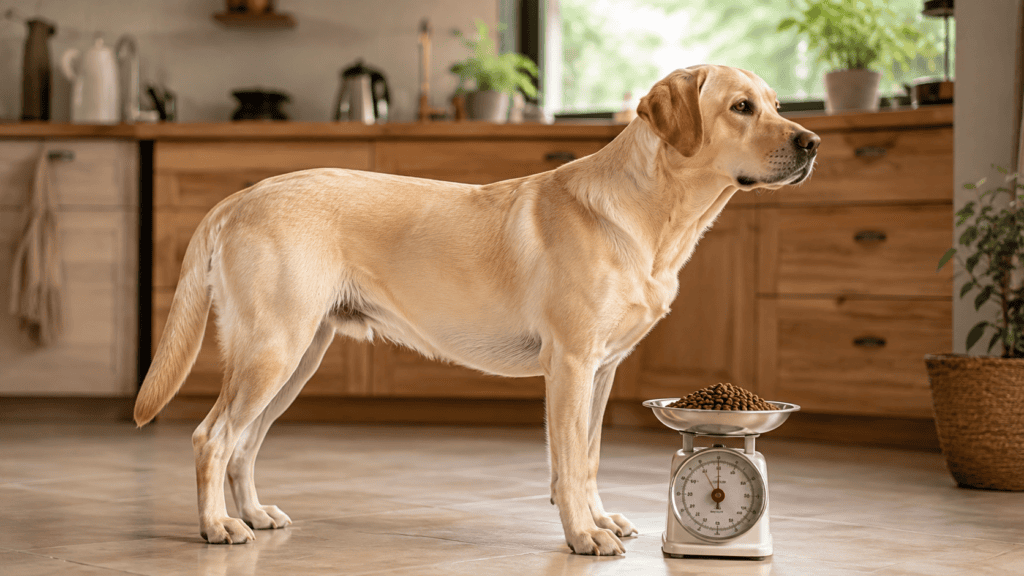
Roughly half the dogs in the UK are carrying more weight than they should, and almost none of their owners set out to make that happen. It arrives a biscuit at a time. The good news is that the fix is largely free - and it is not the bag marked “light”.
The uncomfortable finding about “weight management” food
Of the hundreds of foods we tag for weight management, the group is the worst-scoring category we track (figures checked August 2026):
- Under 10% reach 80 or above, against a third of adult foods
- Median score 66, against 74 for adult foods
- Less declared meat than adult foods at the median
- Median 340 kcal per 100g for the dry ones, against 369 for dry food generally - only about 8% less
Read that last pair together, because it is the whole problem. A typical weight-management food is marginally less calorific than ordinary food, and gets there partly by containing less meat and more filler.
Feeding 8% fewer calories does not make a dog lose weight when the portion is 25% too big. And you have swapped some meat for bulk to achieve it.
First, is your dog actually overweight?
Scales alone will not tell you, because breeds vary enormously. Use body condition:
- Ribs: you should feel them easily under a thin layer, without pressing. If you have to push, there is too much over them.
- From above: there should be a visible waist behind the ribcage. A straight or bulging outline is a sign.
- From the side: the belly should tuck upwards from the ribs to the hind legs, not run level.
Do this monthly. Gradual gain is almost impossible to notice by eye when you see your dog every day - which is exactly how it happens.
What actually works
1. Weigh the food
The single highest-impact change, and it costs nothing. A scoop is not a measurement - a heaped one can hold 30-40% more than a level one, and everybody heaps when the dog is watching.
Kitchen scales, every meal. Our feeding calculator will tell you the gram weight from your dog’s target weight and the food’s actual calorie density.
2. Count the treats
Treats, chews, training rewards and the corner of your toast routinely add 10-20% of daily calories, and are almost never counted. A single dental chew can carry more calories than a small dog’s entire breakfast.
You do not have to stop. Take the treat allowance out of the daily ration rather than adding it on top, and use part of the actual meal for training. The dog does not know the difference.
3. Feed for target weight, not current weight
Work out what your dog should weigh - your vet will confirm it - and feed for that number. Reduce gradually rather than all at once.
4. Add movement gently
Diet does most of the work, but activity helps hold muscle while the fat comes off. Build up slowly - an unfit, overweight dog is not ready for long runs, and joint pain is common in exactly this group.
If you do want a weight-management food
Some are genuinely good. Judge them by composition rather than by the word on the front:
- Protein should stay high. The goal is losing fat while keeping muscle. A “light” food that cut protein along with calories is working against you.
- Lower fat is the honest lever - fat carries more than twice the calories per gram of protein or carbohydrate.
- Fibre for satiety is legitimate. A dog that feels full on less is easier to live with.
- Check what filled the gap. This is where the category slips - calories often come out by bulking up with cheap ingredients:
Cereals (unspecified)Which cereals?MaizeMaize is not the villain some sites make out, but it is not doing your dog favours either - a cheap energy source that lets a recipe hit its numbers inexpensively.Beet pulpThe fibre left after sugar extraction from beets - the sugar is gone, despite the name.Meat and animal derivativesThe vaguest term on any UK label - it can mean almost any animal part from almost any species, and the recipe can change batch to batch.
Beet pulp as a fibre source is perfectly reasonable. An unnamed cereal doing the heavy lifting while the meat percentage drops is not what you were hoping to buy.
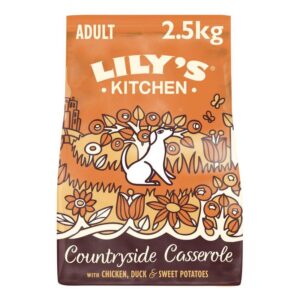
These are the exceptions - the current best of the category, ranked live, so the list updates itself as we rate more:
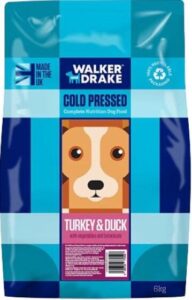
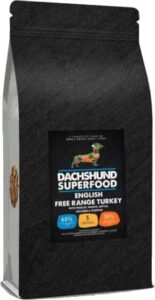
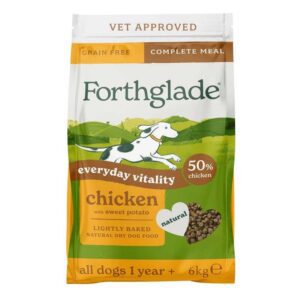
If you switch, transition over 7-10 days - see the switching guide.
Why this matters more than the cosmetics
Excess weight in dogs is associated with a shorter life and a less comfortable one: more joint disease, higher anaesthetic risk, greater likelihood of diabetes, and reduced heat tolerance. [1]
It is also one of the most reversible problems in dog ownership. Portion control and honest treat accounting will resolve the large majority of cases without any change of food at all.
A note on the dog who is always hungry
Some dogs - Labradors especially - are genuinely built to behave as though they have never been fed. That behaviour is not evidence that the portion is too small.
Higher-fibre foods help, as do slow feeders, puzzle toys and splitting the ration into three smaller meals. What does not help is treating every hopeful stare as data. Our guide to fussy eating covers the same loop running in the opposite direction.
Where to go next
- Work out the right daily amount for your dog’s target weight - start here
- The best weight-management foods - ranked, the few that genuinely clear the bar
- Browse the whole category, and sort by score rather than by claim
How do I know if my dog is overweight?
Use body condition rather than the scales alone. You should be able to feel the ribs easily under a thin layer of fat without pressing, see a waist behind the ribcage when looking down from above, and see an upward tuck of the belly when viewed from the side. If you cannot find ribs without pushing, your dog is carrying too much.
Do weight-management dog foods actually work?
They can, but the category is weaker than it looks. In our catalogue weight-management foods score worst of any group we track - under 10 percent reach 80 or above against roughly a third of adult foods - and they hold only about 8 percent fewer calories than ordinary dry food, while declaring less meat. Portion control does more than the label does.
How much should I feed a dog to lose weight?
A common approach is to feed for the dog's target weight rather than its current weight, aiming for 1 to 2 percent body weight loss per week. Slower is safer. Weigh the food on kitchen scales rather than using a scoop, and get your vet to confirm the target before you start.
How fast should a dog lose weight?
Around 1 to 2 percent of body weight per week. Faster than that risks losing muscle rather than fat, and in cats it is genuinely dangerous. A 30kg dog losing 300 to 600g a week is doing well - it should feel unremarkably slow.
Should I cut my dog's food to help them lose weight?
Cut the treats and the extras first, because that is usually where the surplus lives. Simply reducing a complete food a long way can leave a dog short of protein and micronutrients. If a big reduction is needed, a properly formulated diet food or a vet-supervised plan is the safer route.
Sources
- PDSA - Overweight dogs
This is label analysis, not veterinary advice - if your dog has a health condition, talk to your vet before switching foods.