
The best wet dog food in the UK
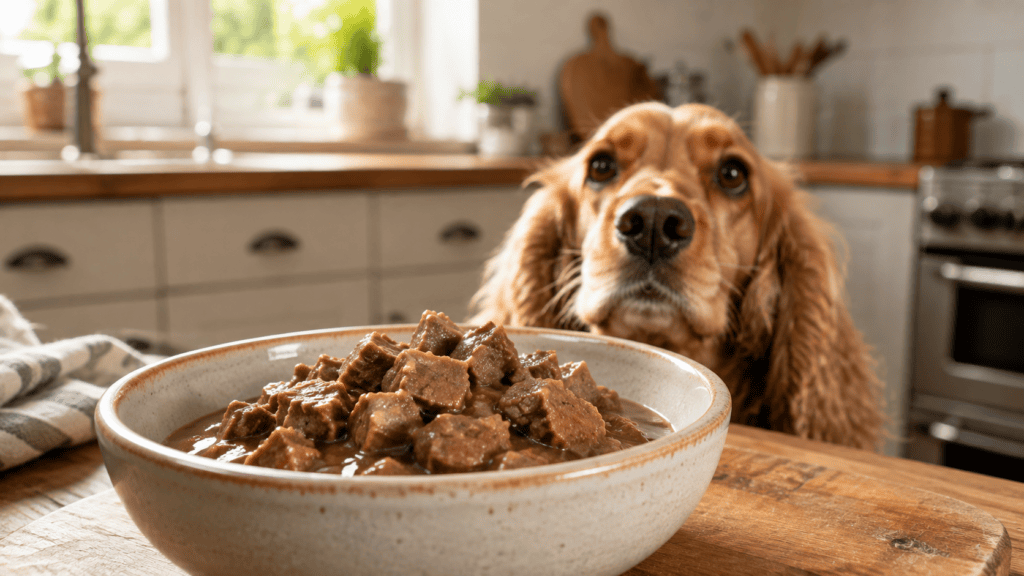
Wet food is the most underrated aisle in the shop. Gram for gram of what actually matters, a good tray usually carries more named meat and fewer preservatives than a good bag, and dogs act like it is a different sport entirely. The catch is arithmetic, not quality - and we will get to that honestly.
Below is the live top 10, ranked by our open 0-100 score with zero sponsored placements - the same data that drives our best wet dog food list and the wet food directory. First, the wet vs dry facts, because most of what you have read about them was written by whoever had stock to shift.
Wet vs dry: the actual facts
The single biggest difference is water. A typical wet food is roughly three quarters moisture; a typical kibble is under a tenth. That one fact explains almost everything else - the softer texture, the stronger smell, the bigger portions, and the trick of comparing labels fairly.
Why wet food protein looks low (and usually is not)
Because here is the trap: the protein number on a wet label always looks pathetic next to a dry one. A tray declaring 8% protein against a kibble declaring 26% looks like a rout - until you remove the water and compare like with like. Strip a 75%-moisture tray down to its dry matter and that 8% becomes 32%; strip a 10%-moisture kibble and its 26% becomes about 29%. The “weak” wet food just won.
- To compare fairly: divide the nutrient percentage by the food’s dry matter (100 minus the moisture figure), then multiply by 100.
- Moisture is a feature. Dogs on wet food drink less from the bowl because dinner did the job - genuinely useful for reluctant drinkers.
- Preservatives. A sealed tray does not need to survive a month in an open bag, so wet recipes typically need less preservation.
- Teeth. The old claim that kibble cleans teeth is mostly wishful crunching - daily brushing does that job, whatever the bowl holds.
Every food page on this site shows the declared composition, so you can run the dry-matter comparison on any wet-vs-dry pair - or just let the score do it, since our open algorithm already normalises for moisture before it awards a single point.
When wet food is the right call
Nobody needs wet food ideologically. There are specific dogs it genuinely serves better:
- Fussy eaters. Aroma does the persuading, and wet food smells dramatically more interesting than kibble. It tops our fussy eater rankings for a reason.
- Older dogs and sore mouths. Soft texture asks nothing of tired teeth.
- Poor drinkers. Every meal arrives with its own water supply.
- Small dogs. The cost problem below barely applies when dinner is half a tray.
- Mixers. Half wet, half dry is a legitimate strategy - a decent tray makes a better topper than most products sold as toppers.
The best wet dog foods in the UK, ranked live
This table is a live query over every wet food we have rated, minimum score 60/100, ranked by score. It reorders itself when recipes change, prices move or a new food outscores the field - no annual rewrite, no quietly outdated list.
| Rank | Food | Type | ODF Score | Per day |
|---|---|---|---|---|
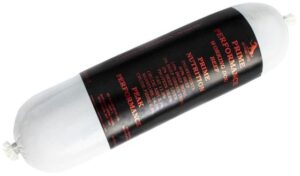
| 1 | K9 PrimeK9 Prime Cuts Prime Performance | Wet | 91/100 | £1.46 approx. |
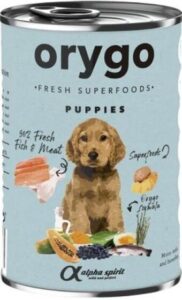
| 2 | OrygoOrygo Puppy Pate | Wet | 91/100 | £3.06 approx. |
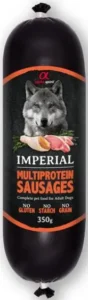
| 3 | Alpha SpiritAlpha Spirit Imperial Wet Sausage Multiprotein | Wet | 90/100 | £5.52 approx. |
| 4 | Alpha SpiritAlpha Spirit Imperial Wet Sausage Poultry | Wet | 90/100 | £4.19 approx. |
| 5 | Alpha SpiritAlpha Spirit Mediterranean Diet Wet Sausage Multiprotein | Wet | 90/100 | £5.61 approx. |
| 6 | JR Pet ProductsJR Complete Wellbeing | Wet | 90/100 | £4.02 approx. |
| 7 | OrygoOrygo Adult Pate | Wet | 90/100 | £2.84 approx. |
| 8 | YdoloYdolo Adult Wet | Wet | 90/100 | £3.71 approx. |
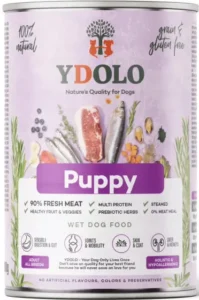
| 9 | YdoloYdolo Puppy Wet | Wet | 90/100 | £3.14 approx. |
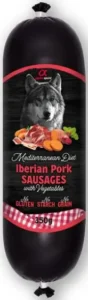
| 10 | Alpha SpiritAlpha Spirit Mediterranean Diet Wet Sausage Iberian Pork | Wet | 89/100 | £5.82 approx. |
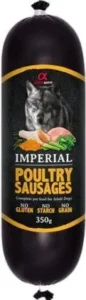
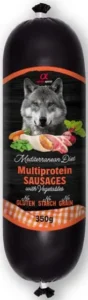
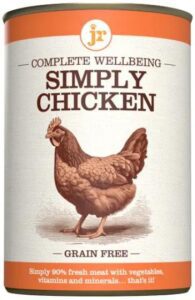
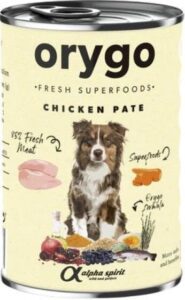

Live data - this table updates itself as we rate foods and track prices.
Filter by life stage, budget or breed size on the wet food directory - and click through to any food page for the full score breakdown and current prices.
Complete or complementary: the small word that matters
One wet-food gotcha deserves its own section. Every pet food must declare itself either “complete” - nutritionally sufficient on its own, formulated to FEDIAF guidelines[2] - or “complementary”, which is the polite word for a topper, treat or mixer that is not a full diet.
A surprising share of attractive wet trays and pouches are complementary, and the word hides in small print while everything else on the pack shouts “dinner”. Feed a complementary food as the whole diet for long enough and nutritional gaps follow. Check the word before the till; every food we rank as a main meal on this page is complete, and each food page states which it is.
The cost reality
Time for the honest bit. Wet food usually costs more per day than dry - often a lot more - because you are buying water, packaging and heavier logistics along with the meat. A tray looks cheap on the shelf; a 20kg dog eating several trays a day is a different conversation at the till.
Three ways to cut the cost of feeding wet
Three rules keep it sane:
- Think price per day, never price per tray. Every food card above shows the real daily cost for a typical dog - that is the only number your wallet feels.
- Size matters. Wet-only feeding is comfortably affordable for a spaniel and eye-watering for a shepherd. Mixed feeding scales the benefit to the budget.
- Cheap wet is where labels get creative. The savings have to come from somewhere, and they usually come out of the meat - see the next section.
For calibration: the cheapest food we currently track works out at £0.12 a day - and it is not a wet food. Wet earns its premium in the right home; it just should not be paying for a pretty label. Here is the live picture, straight from the price data:
Wet dog food - cost per day
Typical figures from our live data - most are approximate, from the manufacturer's RRP.
What to avoid on a wet label
Wet food’s weakness is that gravy hides a multitude of sins. The recurring offenders:
- The 4% trick. Under pet food labelling rules, “with beef” needs only around 4% beef, and “beef flavour” needs barely any at all[3]. A steak photo on the sleeve is not an ingredient.
- Composite categories. If the meat is a category rather than a name, you cannot know what your dog is eating this batch:
Meat and animal derivativesThe vaguest term on any UK label - it can mean almost any animal part from almost any species, and the recipe can change batch to batch.SugarAdded sugar in dog food serves the manufacturer's palatability tests, not your dog's teeth or waistline.CaramelSugar, browned - there to make the food look meatier to you.
- Gelling agents. Necessary in small amounts to hold a chunk in loaf or jelly, worth watching when they pad out the back of a short label - carrageenan is the debated one:
CarrageenanA seaweed-derived gelling agent in wet foods - food-grade carrageenan is approved, but the gut-inflammation debate around it has not gone away.
If any of this is new, our guide on how to read a dog food label decodes every trick with worked examples - ten minutes there pays for itself on every future shop.
What is the best wet dog food in the UK?
Our live ranking above is the honest answer: it reorders itself as we rate new foods and as recipes and prices change, so the top spot always belongs to the highest-scoring wet food we have rated - never to an advertiser. Click any food for its full point-by-point breakdown.
What is the healthiest wet dog food?
The one whose label survives scrutiny: a named meat with a declared percentage at the top of the list, no vague derivative categories, and no sugars or artificial additives. Wet food starts with natural advantages - more meat, fewer preservatives - so the label decides which foods actually cash them in.
What wet dog food do vets recommend?
Vets rarely endorse one brand; most recommend a complete food appropriate to the dog's age, size and any medical condition. For specific conditions they may prescribe a clinical diet, which is a different category we explain but never score. For a healthy dog, a high-scoring complete wet food is exactly the kind of thing they mean.
Is wet food better than dry food for dogs?
Neither format wins outright. Wet typically carries more meat and far more moisture, which suits fussy dogs, poor drinkers and older mouths; dry is cheaper per day and easier to store. Compare foods on dry-matter numbers and price per day, and a high-scoring example of either format beats a low-scoring example of the other.
How much wet food should I feed my dog a day?
Follow the feeding guide on the specific food, because calorie density varies widely between recipes - a rough rule is 3 to 4 percent of body weight for a typical adult, adjusted for activity and body condition. Weigh your dog monthly and let the waistline overrule the label.
Sources
This is label analysis, not veterinary advice - if your dog has a health condition, talk to your vet before switching foods.