
The best dog foods for sensitive stomachs in the UK

A sensitive stomach is not fixed by a bag with a gentle-looking dog and a pastel colour scheme on it. It is managed with a boring, readable label: one named protein, moderate fat, a little gut support and nothing mysterious. The marketing word is “sensitive”; the useful words are the ingredients list.
That is exactly what this page ranks. Every food below is formulated for sensitive digestion and scored out of 100 by our open algorithm - the same live data behind our best foods for sensitive stomachs list and the sensitive stomach directory filter. Nothing here is sponsored, and the ranking reorders itself as recipes and prices change.
How to tell if your dog actually has a sensitive stomach
“Sensitive stomach” is not a diagnosis - it is owner shorthand for a gut that overreacts to normal life. The usual picture looks like this:
- Loose stools that come and go, without an obvious cause
- A noisy, gurgling belly, especially between meals
- Wind that clears the sofa
- The occasional sick episode after eating, in a dog who otherwise seems fine
- Grass-eating and lip-licking spells
- Normal energy and appetite between episodes
Rule these out before you blame the food
Before blaming the food, rule out the classics: table scraps, a treat habit bigger than anyone admits, bin raids on walks, and eating at the speed of a wood chipper. A slow-feeder bowl and a treat audit fix more “sensitive stomachs” than any recipe change.
What to look for in the food
Once the vet has ruled out anything sinister, the label does the heavy lifting. Complete dog foods in the UK are formulated to FEDIAF nutritional guidelines[1], so the difference between foods is not whether they keep a dog alive - it is what the recipe is built from. For a delicate gut, five things matter:
- One named protein. A single, named meat source means fewer suspects when something disagrees - and it makes a later elimination diet far easier.
- A short list you can read. Every extra ingredient is another variable. If the label leads with a composite category instead of an actual ingredient, you cannot manage what you cannot see:
Meat and animal derivativesThe vaguest term on any UK label - it can mean almost any animal part from almost any species, and the recipe can change batch to batch.Beet pulpThe fibre left after sugar extraction from beets - the sugar is gone, despite the name.FOS (prebiotic)A prebiotic fibre that feeds beneficial gut bacteria - commonly from chicory.
- No artificial nasties. Colourings are there to please you, not your dog’s gut:
Artificial coloursDye for the human buying the food - your dog cannot see the pretty colours and did not ask for the additives behind them.
If reading labels feels like decoding a ransom note, our guide on how to read a dog food label covers every trick, and our ingredients A-Z explains what each one is doing in the bowl.
The best dog foods for sensitive stomachs, ranked live
The table below is not an article that quietly went stale three recipe changes ago. It is a live query over every food we have rated: formulated for sensitive digestion, scoring at least 60/100, ranked by score. When a recipe changes or a new food beats the field, the table reorders itself.
| Rank | Food | Type | ODF Score | Per day |
|---|---|---|---|---|
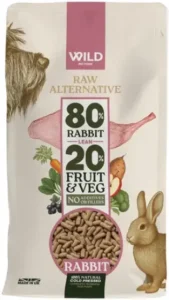
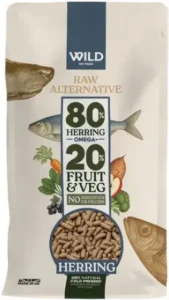
| 1 | Wild Pet Food 20Wild Pet Food Lean 80/20 Complete | Cold-pressed | 87/100 | £1.57 approx. |
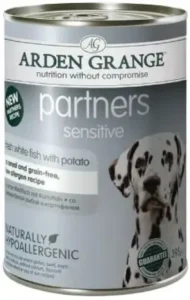
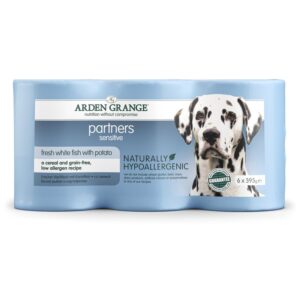
| 2 | Arden GrangeArden Grange Partners Sensitive | Wet | 86/100 | £4.57 approx. |
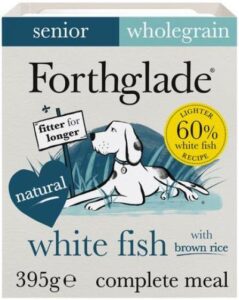
| 3 | ForthgladeForthglade Complete Senior Wholegrain White fish | Wet | 86/100 | £2.66 approx. |
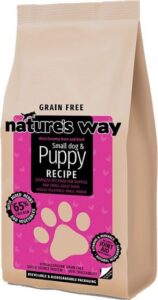
| 4 | Nature's WayNature's Way Grain Free Puppy & Small Dog | Dry | 86/100 | £0.70 approx. |
| 5 | WaitroseWaitrose Senior Grain Free | Dry | 86/100 | £0.44 approx. |
| 6 | Wild Pet Food 20Wild Pet Food Omega+ 80/20 Complete | Cold-pressed | 86/100 | £1.53 approx. |
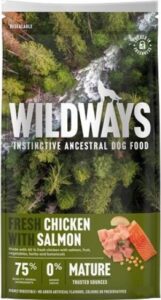
| 7 | WildwaysWildways Senior Dry | Dry | 86/100 | £0.67 approx. |
| 8 | AngellAngell Superior Puppy | Dry | 85/100 | £0.79 approx. |
| 9 | Arden GrangeArden Grange Partners Sensitive - White Fish with Potato | Wet | 85/100 | £4.25 |
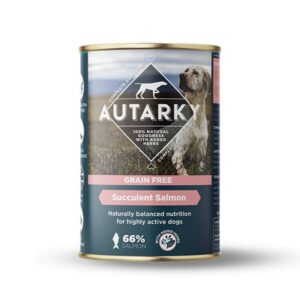
| 10 | AutarkyAutarky Grain Free Wet Dog Food - Succulent Salmon | Wet | 85/100 | £0.53 |

Live data - this table updates itself as we rate foods and track prices.
Want to filter by your dog’s age, breed size or budget? The sensitive stomach directory has every food we have rated for delicate guts, with the full set of filters.
How we scored them
Every food on this site earns its place the same way: 100 points across ingredient quality, meat content, label clarity, additives, nutritional balance and processing, with penalties for red flags. No brand can pay to move up, and every food page shows exactly where its points went.
How to switch foods without making things worse
Here is the uncomfortable truth: the switch itself upsets more stomachs than the food does. A sudden change will unsettle a sturdy gut, never mind a sensitive one - the PDSA recommends changing foods gradually for exactly this reason[2]. Give it 7 to 10 days:
- Days 1-3: roughly a quarter new food, three quarters old
- Days 4-6: half and half
- Days 7-8: three quarters new
- Days 9-10: fully switched
Two rules while you assess a new food
Two rules while you assess. Keep the rest of the diet boring - no new treats, no table scraps, or you will never know what caused what. And give the new food 4 to 6 weeks after the transition before you judge it; gut flora adjusts slowly, and improvement is gradual rather than overnight.
If a careful switch to a well-chosen food changes nothing, the next conversation is with your vet about an elimination diet - our hypoallergenic dog food guide explains how that works and why it beats guesswork.
What about gastrointestinal and veterinary diets?
Gastrointestinal and clinical diets, briefly
You will also meet a second shelf: clinical gastrointestinal diets, usually behind names like “gastrointestinal” or “GI”, sold through vets or with a vet’s say-so. These are a different tool for a different job - formulated for diagnosed conditions such as pancreatitis or chronic enteropathy, often with unusual fat levels or hydrolysed proteins that would make no sense for a healthy dog.
Two things to know. If your vet has prescribed one, that instruction outranks every list on the internet, including ours. And we never score clinical diets - judging a therapeutic food by pet-food rules would be like reviewing a cast as a fashion accessory. The rankings on this page are for the everyday sensitive stomach, not the diagnosed one.
When it is a vet problem, not a food problem
Food solves a lot, but it has limits, and a healthy diet is only one part of the welfare picture[3]. Persistent symptoms after a proper food trial, any weight loss, blood, repeated vomiting, or a dog who seems flat - all of those need a professional, because pancreatitis, parasites and worse can all wear a “sensitive stomach” costume. The list on this page is for the dog whose vet has already shrugged and said “probably just a sensitive stomach” - which, happily, is most of them.
What is the best dog food for a dog with a sensitive stomach?
The best food for a sensitive stomach has one named protein, a short readable ingredient list, moderate fat and added prebiotics. Our live ranking above reorders itself as scores and recipes change, so the current top spot always belongs to the highest-scoring food formulated for sensitive digestion - not to whoever bought an advert.
Why is my dog being sick after eating?
Occasional sickness is often eating too fast, a sudden food change or scavenged extras. Repeated vomiting, blood, weight loss or a dog that seems unwell is a vet visit, not a food change. If the vet rules out illness, a slow switch to a simpler, clearly labelled food is the sensible next step.
Is grain-free food better for a sensitive stomach?
Not automatically. Most dogs digest rice and oats perfectly well, and confirmed food reactions point to proteins like chicken, beef and dairy far more often than to grain. Focus on a short recipe with one named protein rather than paying extra for the absence of grain.
How long does a new food take to settle a sensitive stomach?
Transition over 7 to 10 days, then give the food 4 to 6 weeks before judging it. Gut flora adjusts slowly and improvement is usually gradual. If symptoms get worse at any point during the switch, stop and speak to your vet.
Is there a puppy food for sensitive stomachs?
Yes - several growth foods are formulated for sensitive digestion, and puppy stomachs are upset most often by fast food changes rather than by the food itself. Filter our directory by puppy plus sensitive stomach, and always switch a puppy over 7 to 10 days.
Sources
This is label analysis, not veterinary advice - if your dog has a health condition, talk to your vet before switching foods.