
Feeding an older dog: what actually changes (and what does not)
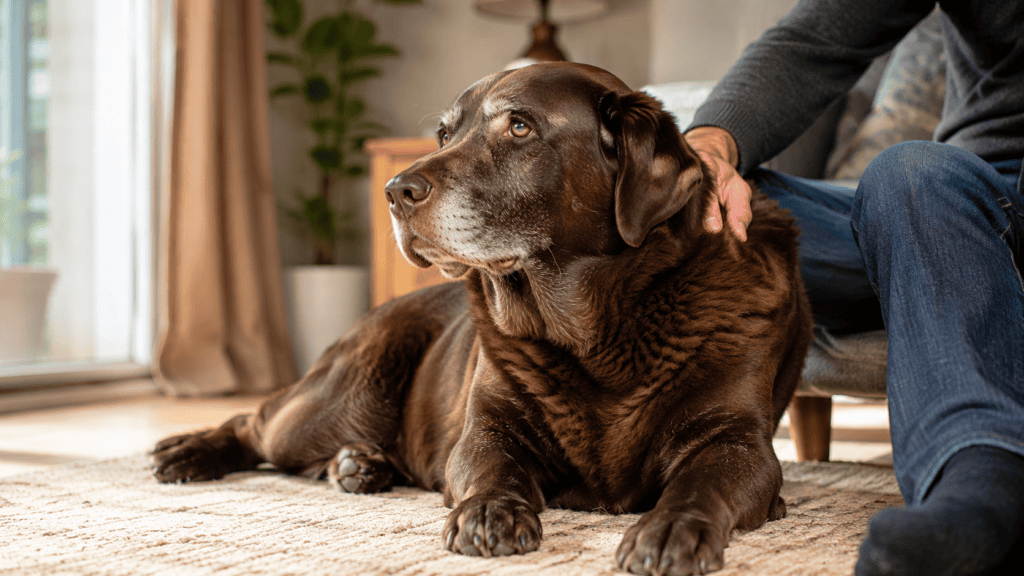
Here is the finding that should change how you shop for an older dog: on our scoring, senior foods sit just a couple of points above adult foods at the median (76 against 74 when we checked in August 2026) - and the typical declared meat content is identical. Whatever “senior” is doing on the front of the bag, it is not reliably buying your dog a better recipe.
When is a dog actually senior?
By size, not by birthday. Bigger dogs age faster:
- Small breeds (under 10kg): senior from around 10-12 years
- Medium breeds (10-25kg): from around 8-10 years
- Large breeds (25-45kg): from around 6-8 years
- Giant breeds (45kg+): from as early as 5
A Great Dane is genuinely elderly at an age where a Jack Russell is barely middle-aged. The label on the bag does not know which one you have.
The protein myth, which is worth unlearning
The idea that older dogs should eat less protein has been repeated for decades. It came from a reasonable-sounding worry - that protein burdens ageing kidneys - which has not held up for healthy dogs.
Current thinking runs the other way. Older dogs lose muscle mass, they become less efficient at using dietary protein, and maintaining lean body mass is one of the better predictors of how well a dog ages. Restricting protein in a healthy older dog helps that process along in the wrong direction.
So when you look at a senior food, check the protein figure. If it is markedly lower than the adult version of the same range, ask why you are paying for that.
What genuinely changes
Calories, downwards
Older dogs move less and carry less muscle, so they need fewer calories - often 10-20% fewer. This is the change most owners miss, because it happens gradually and the scoop stays the same size. The result is slow weight gain on exactly the dog least able to carry it.
Re-check the portion with our feeding calculator as your dog slows down, and weigh them every couple of months rather than eyeballing it.
Joints
What is worth looking for:
- Omega-3 fatty acids, particularly from fish oil, which have reasonable evidence behind them for inflammation
- Declared glucosamine and chondroitin - common in joint formulas, though food-level doses are usually modest
- Above all, a lean dog. Every extra kilogram is extra load on a painful joint, and weight is the intervention with the strongest evidence behind it
These are the current top scorers among the foods we tag for joint support - the list re-ranks itself as scores change:
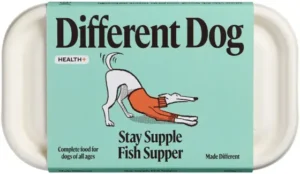

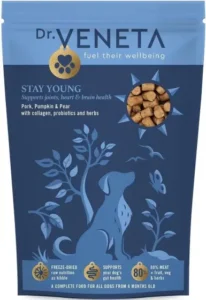
If your dog is genuinely arthritic, talk to your vet about a proper therapeutic dose. A food is unlikely to deliver one on its own.
Teeth and texture
Dental disease is extremely common in older dogs and is a frequent hidden reason for going off food. If your older dog has become reluctant at mealtimes, get the mouth checked before you change the recipe. Softening dry food with warm water, or moving to wet, helps a sore mouth - but it treats the symptom, not the tooth.
Digestion and hydration
Some older dogs handle fat less well, and constipation becomes more common. A moderate-fat food with reasonable fibre often suits better. Wet food helps with hydration, which matters more in older dogs - see our wet vs dry comparison for the cost trade-off.
What to actually look for on the label
Ignore the word “senior” and read the same things you would read on any food. Our score is built on exactly these:
- Named meat, high in the list, with a percentage - and do not accept less of it because the bag says senior
- Protein that has not been quietly cut versus the adult equivalent
- Moderate fat, for calorie control rather than restriction of protein
- Declared joint support, if that is what you are buying it for
- Nothing vague - the usual terms cost points at every age:
Meat and animal derivativesThe vaguest term on any UK label - it can mean almost any animal part from almost any species, and the recipe can change batch to batch.Cereals (unspecified)Which cereals?Oils and fats (unspecified)Unnamed oils and fats of unknown origin and quality.
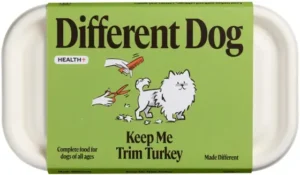
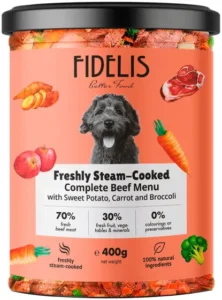
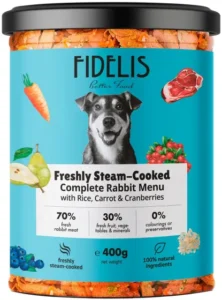
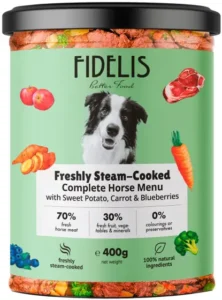
And this is what passes that test today - the current best-scoring foods for seniors, straight from the live rankings:
Weight loss is a warning sign, not a feeding problem
The bottom line
There is no regulatory standard for senior dog food, and our data shows the category delivers no reliable quality advantage - a couple of median points, with no more declared meat.
That does not mean senior foods are bad. Plenty are excellent. It means the word on the bag is not doing the work you might assume, and you should judge the food in front of you on its actual composition.
Feed a good food, keep them lean, keep the protein up, check the teeth, and weigh them regularly. That list will do more for an old dog than any label.
Where to go next
- The best senior dog food - top 10, ranked
- The best dog food for joint care, ranked the same open way
- Browse every senior food we rate, or ignore the category and sort the whole directory by score
When is a dog considered senior?
By size, not by a fixed age. Small breeds are usually considered senior from around 10 to 12 years, medium breeds from 8 to 10, large breeds from 6 to 8, and giant breeds from as early as 5. A Great Dane is elderly at an age when a Jack Russell is middle-aged.
Does my old dog need senior food?
Not automatically. There is no legal definition of senior dog food and no required formulation, so the label alone guarantees nothing. On our scoring, senior foods sit within a couple of points of adult foods at the median, with identical typical declared meat. Judge the individual food, not the word on the bag.
Should older dogs eat less protein?
This is the most persistent myth in senior feeding, and current thinking is the opposite. Healthy older dogs generally need as much good-quality protein as younger ones, and often more, because they lose muscle mass with age. Protein restriction is for dogs with diagnosed kidney disease, on veterinary advice - not a routine precaution.
What should I feed a senior dog with joint problems?
Keeping them lean matters more than any ingredient - every excess kilogram is load on painful joints. Beyond that, look for omega-3 fatty acids and declared glucosamine or chondroitin. Food-level doses are usually modest, so discuss a proper supplement with your vet if your dog is genuinely arthritic.
Why is my older dog losing weight?
Unintentional weight loss in an older dog is a veterinary question, not a feeding one. Kidney disease, dental pain, cancer and several other conditions cause it. Get it checked before adjusting the diet - and weigh your dog rather than relying on how they look, because gradual loss is very easy to miss.
This is label analysis, not veterinary advice - if your dog has a health condition, talk to your vet before switching foods.