
Wet vs dry dog food
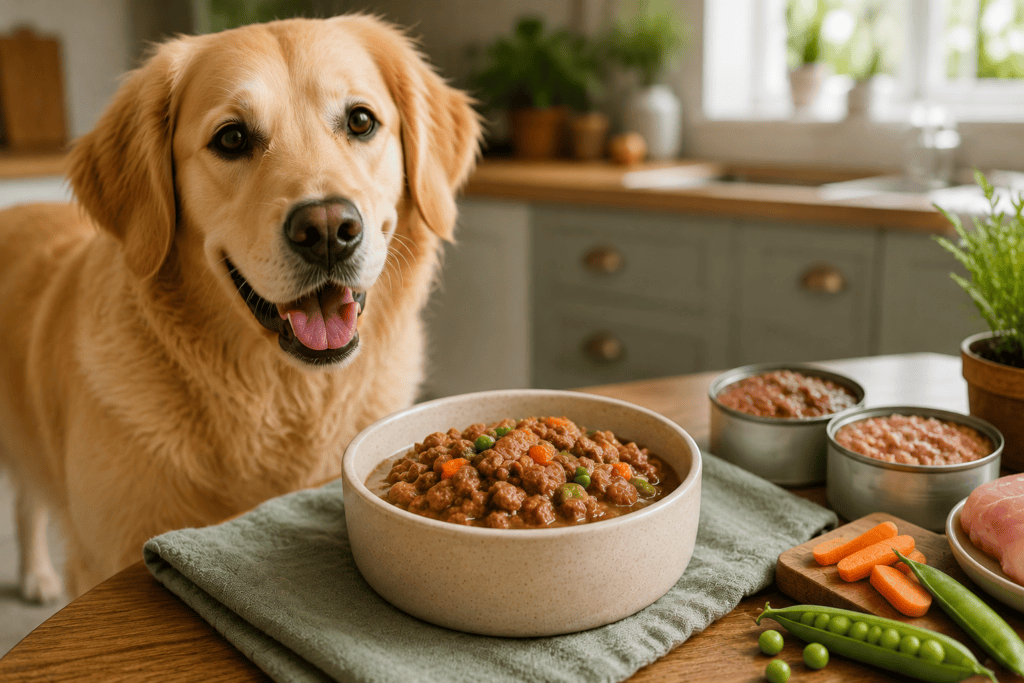
Ask a wet-food brand and wet is better. Ask a kibble brand and kibble is better. We score hundreds of wet foods and well over a thousand dry ones against the same criteria, so here is what the labels actually say - including the part neither side puts on the packaging.
The short answer
Wet food scores better. Dry food costs less. Both are true by a wider margin than the marketing on either side suggests.
Of the wet foods we have scored, half reach 80 or above. For dry, it is around one in five. The median wet food scores 79; the median dry food scores 70. But the median wet food costs around £4.11 a day to feed our reference dog, against £0.89 for dry (checked August 2026).
That is not a rounding difference. Feeding wet costs four to five times more, every day, for the life of the dog. On a twelve-year-old Labrador that is the difference between roughly £4,000 and £18,000 of food.
The live numbers, straight from the price data - these update themselves as prices and ratings move:
Dry dog food - cost per day
Typical figures from our live data - most are approximate, from the manufacturer's RRP.
Wet dog food - cost per day
Typical figures from our live data - most are approximate, from the manufacturer's RRP.
So the real question is not “which is better”. It is how much you are willing to pay for the difference, and whether your dog actually needs it.
Why wet food scores higher
Mostly meat. The median wet food declares 50% meat content; the median dry food declares 26% (checked August 2026). Wet food also tends to carry shorter ingredient lists with fewer vague catch-all terms, which is exactly what our scoring rewards.
There is a manufacturing reason for this, not just a marketing one. Dry food has to hold its shape, so it needs starch - and starch means rice, potato, peas or similar taking up a meaningful share of the recipe. Wet food has no such constraint. It can be mostly meat because nothing needs to bind it into a shape.
The binders themselves are not the problem, and they rate perfectly respectably on their own terms:RiceA digestible, gluten-free named grain - a perfectly reasonable energy source that grain-free marketing loves to demonise.PotatoA gluten-free starch - clean energy, modest nutrition.PeasA named legume adding protein and fibre - fine as a supporting act.
That is a structural advantage, not a brand-by-brand one, which is why the gap is so consistent.
Why dry food is not the villain here
Roughly one in five dry foods still scores 80 or above - close to four hundred foods. If cost matters to you - and for most households it does - a high-scoring kibble beats a mid-scoring wet food that you end up rationing because it is expensive.
Dry food also has practical advantages the score does not measure: it keeps once opened, it is easy to weigh accurately, it works in puzzle feeders and slow feeders, and it does not need refrigerating. None of that shows up in an ingredient analysis, and all of it matters at 7am on a Tuesday.
The honest framing: dry food has a lower ceiling on our criteria, but the good ones clear the bar comfortably.
The dental myth, dealt with
You will read that dry food cleans a dog’s teeth. Standard kibble does not do this to any meaningful degree - most pieces shatter on first contact rather than scraping the tooth, and the effect on plaque is close to nothing.
Purpose-made dental diets, with larger engineered kibble designed to flex rather than crumble, are a different product and do have evidence behind them.
If dental health is your reason for choosing dry, choose an actual dental diet or brush the teeth. Do not choose ordinary kibble and assume the job is done.
Mixing wet and dry
Perfectly fine, and it is where a lot of owners land: dry as the base, wet as a topper for palatability and moisture. It is also a sensible way to get some of the quality without the full cost.
The only thing to get right is the maths. You are splitting one daily ration between two foods, not adding a second meal on top. Overfeeding is the most common outcome of mixing, and it is the easiest to avoid.
What about moisture and hydration?
Wet food is roughly 75-80% water; dry food is around 8%. A dog eating wet food takes in considerably more water with its meal.
For most healthy dogs with a full water bowl this makes little practical difference, because they simply drink to make up the shortfall. It matters more if your dog has a history of urinary or kidney problems, or is one of those dogs who never seems to drink. In those cases the moisture is a real clinical argument rather than a marketing one, and it is worth raising with your vet.
So which should you buy?
A reasonable rule from the numbers:
- Budget is the binding constraint: buy the highest-scoring dry food you can afford. There are 294 scoring 80+, so this is not a compromise you should feel bad about.
- Quality matters most and cost is not the issue: wet, where over half the catalogue clears 80.
- Fussy eater: wet, or dry with a wet topper. Palatability is the whole battle and nothing else matters if the bowl stays full.
- Practicality matters most: dry, and pick a good one rather than defaulting to whatever is on offer at the supermarket.
What we would not do is pay wet-food prices for a low-scoring wet food. Being wet is not itself a quality signal - it raises the ceiling, it does not guarantee the result. Plenty of wet foods sit below the median dry food, and a wet tray can still declare its meat like this:Meat and animal derivativesThe vaguest term on any UK label - it can mean almost any animal part from almost any species, and the recipe can change batch to batch.
See the actual rankings
We rank every food on the same criteria, and the lists update as the data does:
- The best wet dog food - top 10, ranked
- The best dry dog food - top 10, ranked
- Or browse every wet food and every dry food and filter them yourself
If you want to see how two specific foods stack up, the comparison tool puts their ingredients, analysis and score side by side. And if you are not sure how much to feed either way, the feeding calculator works it out from your dog’s weight.
Is wet food better than dry food for dogs?
On ingredient quality, generally yes - around half of the wet foods we score reach 80 or above, against roughly one in five dry foods, and wet declares far more meat on average. But wet costs several times more per day to feed. A high-scoring dry food beats a mediocre wet one.
Does dry food clean a dog's teeth?
Ordinary kibble does not, to any meaningful degree - it mostly shatters on contact rather than scraping the tooth. Purpose-made dental diets with larger engineered kibble are a different product and do have evidence behind them.
Can I mix wet and dry dog food?
Yes, and many owners do. The one thing to get right is the total: work out the daily ration once and split it between the two foods. Following both packets' feeding guidelines at the same time means feeding two full rations.
Is wet food better for hydration?
Wet food is around 75 to 80 percent water against roughly 8 percent for dry, so it does contribute more moisture. For a healthy dog with water available this rarely matters. It matters more for dogs with urinary or kidney issues - worth a conversation with your vet.
Why is wet dog food so much more expensive?
You are largely paying to ship water. Wet food is mostly moisture by weight, so the cost per kilogram of actual nutrition is much higher, and the packaging is heavier and more complex than a paper sack.
This is label analysis, not veterinary advice - if your dog has a health condition, talk to your vet before switching foods.