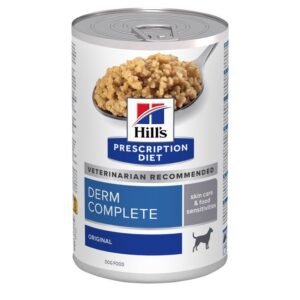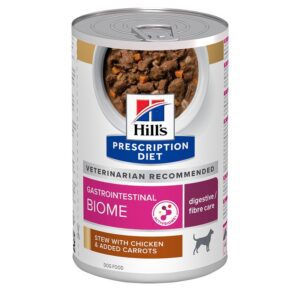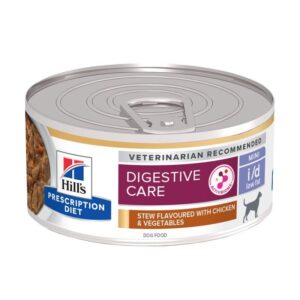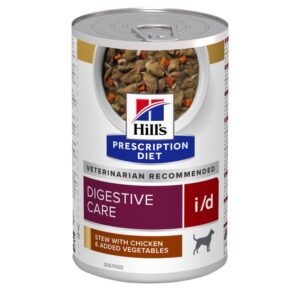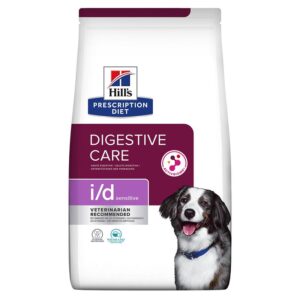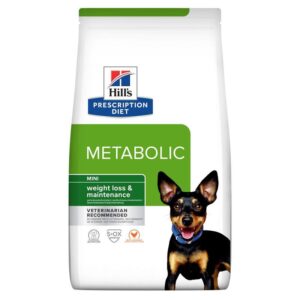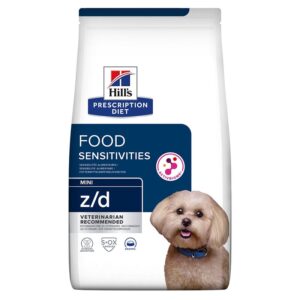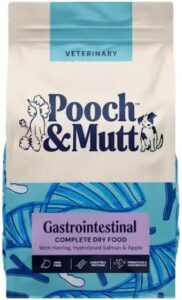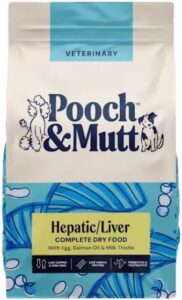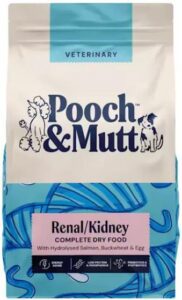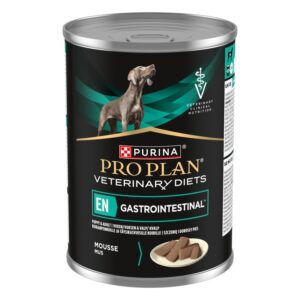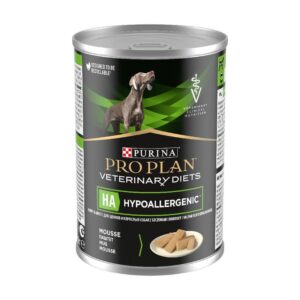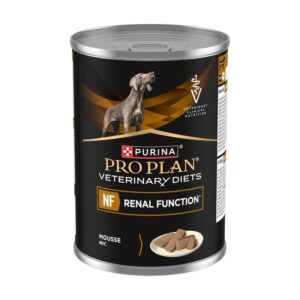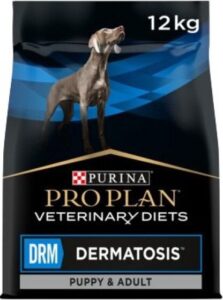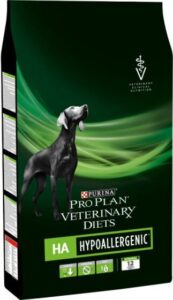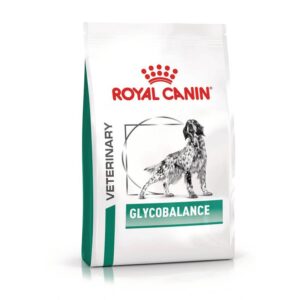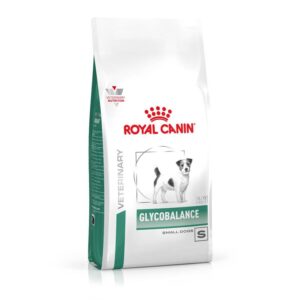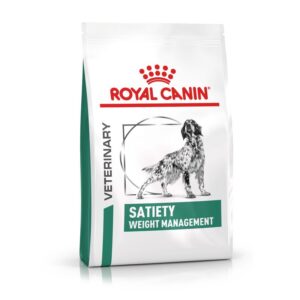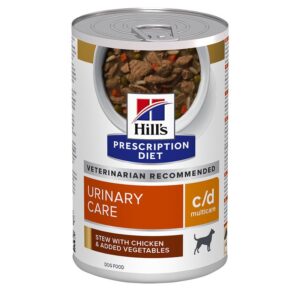
Wet
£5.94 / day10% meat
- NaturalNo artificial colours, flavours or preservatives.
Veterinary diets are formulated to support specific, diagnosed conditions - kidney disease, urinary crystals, serious digestive disorders - and they follow different rules from every other food on this site. They are designed to work under professional direction, sometimes by deliberately restricting nutrients that would be wrong to restrict in a healthy dog. That is why we list and explain them but do not score them: judging a restricted-phosphorus kidney diet with an everyday nutrition algorithm would mislead in both directions.
Veterinary dog food
161
foods on this list
161 foods
If your vet has recommended a clinical diet, the questions this page can help with are practical ones: what the diet contains, what it costs per day, and whether an equivalent formulation exists from another maker at a better price. Switching between equivalent clinical diets is a conversation to have with your vet, not a swap to make on price alone.
If your dog is healthy and you are simply browsing, a veterinary diet is not a premium upgrade - feeding one without a matching diagnosis can be actively unhelpful. This is label analysis, not veterinary advice. If your dog has a health condition, talk to your vet before switching foods.
Mostly no - despite the 'prescription diet' branding, these foods are not prescription-only medicines in the UK, and retailers commonly sell them with, at most, a request to confirm a vet recommended them. That does not make them casual purchases: they are formulated for diagnosed conditions and should be fed under veterinary guidance.
It is not recommended. Clinical diets often deliberately restrict or boost specific nutrients to manage a condition - adjustments that are wrong for a healthy dog. A veterinary label is not a premium tier; without the matching diagnosis you would be paying more for a food deliberately unsuited to your dog. Choose from the standard ranges instead.
Because our algorithm judges everyday nutrition, and clinical diets play a different game. A kidney diet restricts phosphorus on purpose; scoring it against healthy-dog standards would punish it for doing its job, and a high score might encourage feeding it without a diagnosis. So we list them, explain them and show the ingredients - without a /100.
Sometimes - several manufacturers make clinical diets for the same conditions, and prices differ meaningfully between equivalent formulations. The comparison is worth doing, but the decision is not price-alone: whether an alternative suits your dog's specific condition is a question for your vet, who knows the diagnosis behind the recommendation.
Go deeper on the topics behind this page.
 Best British dog food: the live rankingWhich UK-made dog foods actually score highest? The live British
ranking from our open ODF Score - brands, recipes and budget picks, updating
themselves as we rate more foods.Read the guide
Best British dog food: the live rankingWhich UK-made dog foods actually score highest? The live British
ranking from our open ODF Score - brands, recipes and budget picks, updating
themselves as we rate more foods.Read the guide How to switch your dog’s food without upsetting their stomachThe 7-day transition, what normal looks like on day three, and when to stop. Most "this food upset my dog" is actually a rushed changeover.Read the guide
 Puppy feeding guide: how much, how often, and when to switchHow much to feed a puppy, how often, when to move to adult food - and the one mistake that can permanently damage a large-breed dog.Read the guide
 How much does it really cost to feed a dog?The gap between the cheapest and priciest way to feed the same dog is 72x - and 62 foods score 80+ for under a pound a day. The real numbers.Read the guide