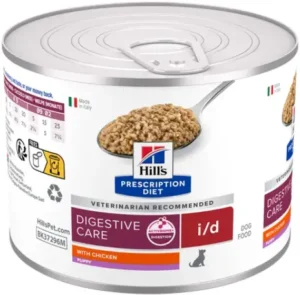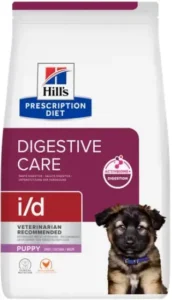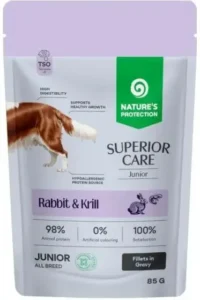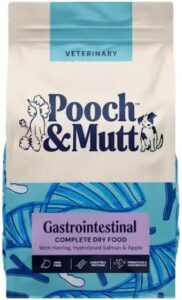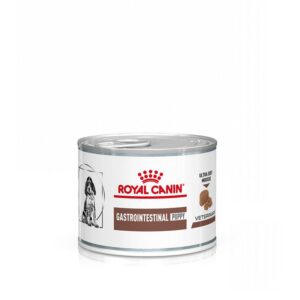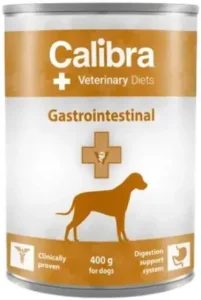
Wet
£4.85 / day approx.30% meat
- High meat30% named meat (30% or more counts as high).
- NaturalNo artificial colours, flavours or preservatives.
Veterinary diets are formulated for specific medical conditions and are normally fed under veterinary supervision. They are a different kind of product from the rest of the category, and our standard scoring does not apply to them in the usual way. For puppies, the question is whether the recipe is built for the job.
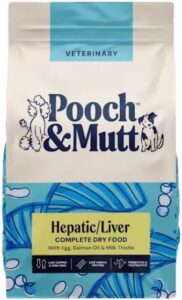
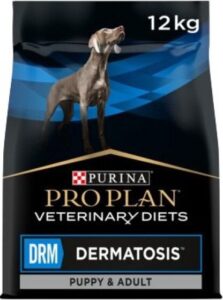
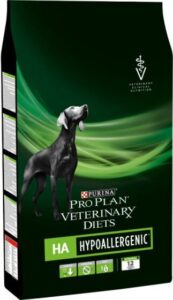
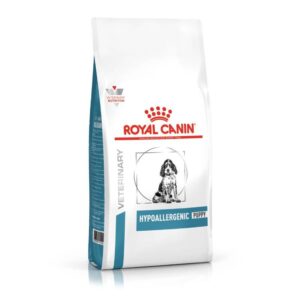
Veterinary dog food for puppy food
19
foods on this list
19 foods
Puppies are building a body, so they need more energy, more protein and a controlled calcium-to-phosphorus balance than an adult dog does. Large-breed puppies in particular should not grow too fast, which is why growth-specific recipes exist. These recipes are built around a clinical target - kidney support, urinary pH, weight loss, an elimination protein - and that target can justify ingredient choices that would score badly on a general diet. Judge them on whether they suit the diagnosis, not on the ingredient list alone.
Puppies need a food labelled for growth or for all life stages, not an adult maintenance recipe. This is label analysis, not veterinary advice. If your dog has a health condition, talk to your vet before switching foods. Every food below is filtered to veterinary diets suitable for puppies, with the full ingredient breakdown on each food page.
The one whose label holds up. Our list ranks every veterinary dog food suitable for puppies by the ODF Score, which reads the ingredients rather than the marketing. Puppies need a food labelled for growth or for all life stages, not an adult maintenance recipe.
No. These diets are formulated for diagnosed conditions and the wrong one can do harm. This is label analysis, not veterinary advice. If your dog has a health condition, talk to your vet before switching foods.
Most dogs move to adult food somewhere between nine and eighteen months, later for large and giant breeds because they keep growing for longer. Your vet or the feeding guide on the pack is the better guide than a fixed number.
Go deeper on the topics behind this page.
 Best British dog food: the live rankingWhich UK-made dog foods actually score highest? The live British
ranking from our open ODF Score - brands, recipes and budget picks, updating
themselves as we rate more foods.Read the guide
Best British dog food: the live rankingWhich UK-made dog foods actually score highest? The live British
ranking from our open ODF Score - brands, recipes and budget picks, updating
themselves as we rate more foods.Read the guide How to switch your dog’s food without upsetting their stomachThe 7-day transition, what normal looks like on day three, and when to stop. Most "this food upset my dog" is actually a rushed changeover.Read the guide
 Puppy feeding guide: how much, how often, and when to switchHow much to feed a puppy, how often, when to move to adult food - and the one mistake that can permanently damage a large-breed dog.Read the guide
 How much does it really cost to feed a dog?The gap between the cheapest and priciest way to feed the same dog is 72x - and 62 foods score 80+ for under a pound a day. The real numbers.Read the guide