
Dog food ingredients to avoid: the red-flag list

The front of a dog food bag is an advert. The truth is on the back, in the composition list - and that is where the red flags live. None of the ingredients below are illegal or, in small amounts, immediately dangerous. The problem is what they tell you about a recipe: that the maker reached for something vague, cheap or cosmetic instead of something named and useful. Each one costs points on our open score, on every label it appears on.
This is the plain-English version of our red-flag ingredient list. Every term links to its full glossary page, and every food we rate shows you exactly which of these it contains - no guesswork required.
The quick list: ingredients to avoid in dog food
For the people who came for the list - here it is, worst first. Everything below gets its full explanation further down:
- “Meat and animal derivatives” - anonymous meat; the recipe can change batch to batch
- Unspecified “meat meal” - same trick, dried
- “Cereals” - unnamed grain, identity withheld
- “Derivatives of vegetable origin” - unnamed plant matter
- Unspecified “oils and fats” - could be salmon oil, could be recycled frying fat
- Artificial colours - your dog would eat it grey; the dye is for you
- Artificial flavours and unspecified “digest” - perfume for a recipe that needs it
- BHA, BHT and ethoxyquin - artificial antioxidants with genuine question marks over them
- Added sugars, caramel and molasses - a dinner that needs sweetening to be eaten
Notice the pattern: most of these are not scary chemicals at all. They are anonymity. That is the actual skill of reading a label - and it takes about a minute to learn.
Vague catch-alls like “meat and animal derivatives” - the biggest red flag
The worst thing on a label is not a scary chemical. It is an anonymous category. Legally, a bag can list a whole group of ingredients under one umbrella name, which means the recipe can change batch to batch and you would never know. This is not a loophole a brand invented - the labelling framework explicitly allows ingredients to be declared by category rather than individually[1]. It is legal, it is common, and it is the single most useful thing to learn to spot.
The usual suspects: Meat and animal derivativesThe vaguest term on any UK label - it can mean almost any animal part from almost any species, and the recipe can change batch to batch.Meat meal (unspecified)Rendered meat from unnamed species.Cereals (unspecified)Which cereals?Derivatives of vegetable originA catch-all for plant by-products - could be decent fibre, could be floor sweepings from milling. Compare that with a named alternative like chicken or chicken meal, where you know exactly which animal and which part. Named good, anonymous bad - it really is that simple.
Artificial colours and flavours - additives that feed the buyer, not the dog
A second group exists purely to make the food look, smell or keep better on a shelf - benefits for the human and the supply chain, not the dog. Artificial coloursDye for the human buying the food - your dog cannot see the pretty colours and did not ask for the additives behind them.Artificial flavoursSynthetic taste - decent food does not need to fake its flavour.BHA (E320)An artificial preservative classified as a possible carcinogen and banned from many human foods.BHT (E321)BHA's chemical sibling - an artificial preservative with the same cloud over it and the same natural alternatives available.EthoxyquinA preservative developed as a pesticide, suspended from EU food use. These are authorised feed additives rather than contraband, and ethoxyquin in particular has been through a formal EU safety re-evaluation which found the available data insufficient to conclude on its safety, leading to its authorisation being suspended pending further evidence[2]. Natural preservation (mixed tocopherols, or simply a shorter shelf life) does the same job without the question marks. A food that reaches for the artificial versions has made a cost decision, and we score it accordingly.
Added sugars and cheap fillers in dog food
Bulk has to come from somewhere, and the cheapest bulk is not always the best. Watch for added sugars and sweeteners dressed up under friendly names - CaramelSugar, browned - there to make the food look meatier to you.MolassesSugar industry residue - marginally more minerals than white sugar, still sugar.add palatability and colour but no meaningful nutrition, and a food that needs sugar to be eaten is telling you something. Unspecified “digest” (Digest (unspecified)A flavour coating made from hydrolysed animal tissue - which animal, the label does not say.) is a sprayed-on flavour coating that does the same job.
When a filler is actually a problem
Fillers are not automatically bad - a little wholegrain or beet pulp has a purpose. The red flag is when a vague, cheap filler sits high on the list where a named protein should be. Position matters as much as the ingredient itself, which is exactly why reading the label in order tells you more than any single word.
The ones that are NOT red flags (despite what the internet says)
Plenty of ingredients get a bad reputation they have not earned, usually from brands with something to sell you instead. Being honest about these matters more than adding to the panic:
- Named grains. Rice, oats and barley are useful, digestible carbohydrates for most dogs. Grain-free is a marketing category, not a health category - the confirmed food reactions in dogs are far more often to proteins than to grain. A named wholegrain below a named meat is fine. Vague “cereals” above it is not.
- Named meat meals. “Chicken meal” is chicken with the water removed, so it is a concentrated protein source and often a sign of a decent recipe. Only the unnamed version is a problem.
- Beet pulp. Widely called a filler; actually a fermentable fibre that supports stool quality. Boring, useful, unfairly maligned.
- Long chemical names in the additive panel. Most are vitamins and minerals - “DL-alpha-tocopherol acetate” is vitamin E. A dense additive panel is usually a food meeting its nutritional requirements, not hiding something.
The professional framing is the same one vets use: judge the recipe and the company behind it on evidence, not on which ingredient is currently unfashionable[3].
Ingredients to avoid vs foods that are toxic
Two different questions get tangled together constantly. Everything above is about the quality of a manufactured food. It is not the same as the human foods that are genuinely dangerous to dogs - grapes, chocolate, xylitol and the rest - which is a hard safety line rather than a scoring judgement. If that is what brought you here, the list you want is can dogs eat…? - we keep vet-reviewed verdicts for 136 human foods, including 34 genuinely dangerous ones - and it is a different kind of list entirely.
How to spot them without a chemistry degree
You do not need to memorise this list. You need one habit: turn the bag over and read the composition, top to bottom.
- Start at the top. The first few ingredients are the bulk of the food. You want a named animal protein there, not an umbrella term.
- Scan for anonymity. Any “derivatives”, “meat meal” or “cereals” with no animal or grain named is a flag.
- Watch the back half. Colours, artificial flavours, sugars and artificial antioxidants tend to hide lower down the list.
- Let us do the reading. Every food in our directory is scored on exactly this, and its page lists every red flag it contains in plain English.
We currently track 464 ingredients and have scored 3,075 foods against them. The point is not to frighten you off every bag on the shelf - it is to make the label readable, so you can choose with your eyes open.
Foods that keep their labels clean
Easier than avoiding a list is starting from the other end: foods whose composition already reads well. These are the highest-scoring complete foods we have rated, and their pages show every ingredient we flagged, if any:
| Rank | Food | Type | ODF Score | Per day |
|---|---|---|---|---|
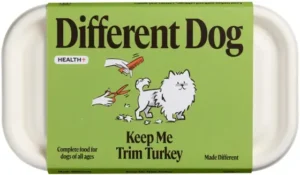
| 1 | Different DogDifferent Dog Health+ Keep Me Trim Turkey | Fresh-cooked | 94/100 | £4.83 approx. |
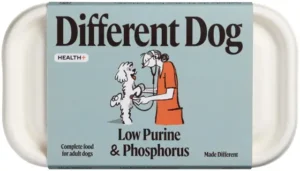
| 2 | Different DogDifferent Dog Health+ Low Purine & Phosphorus | Fresh-cooked | 94/100 | £4.67 approx. |
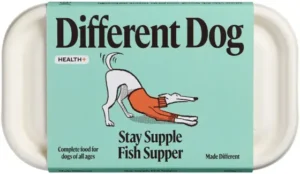
| 3 | Different DogDifferent Dog Health+ Stay Supple Fish Supper | Fresh-cooked | 94/100 | £5.28 approx. |
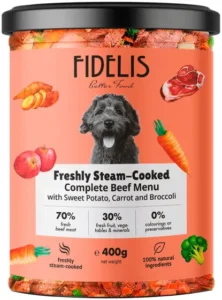
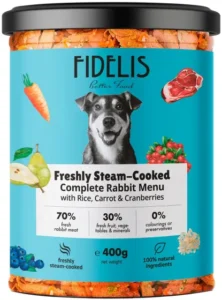
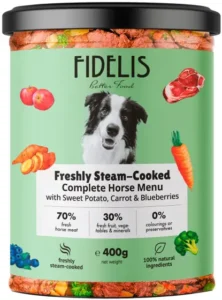
| 4 | FidelisFidelis Fresh Menu (grain free recipes) | Fresh-cooked | 94/100 | £3.71 approx. |
| 5 | FidelisFidelis Fresh Menu (grain inclusive recipes) | Fresh-cooked | 94/100 | £3.56 approx. |
| 6 | FidelisFidelis Fresh Menu (novel protein recipes) | Fresh-cooked | 94/100 | £4.62 approx. |
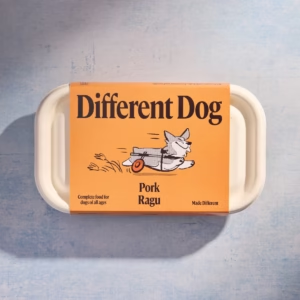
| 7 | Different DogDifferent Dog Pork Ragu | Fresh-cooked | 93/100 | Price coming soon |
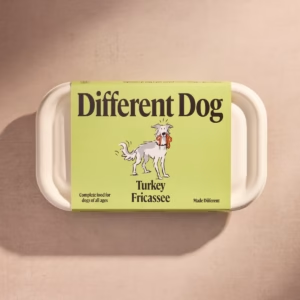
| 8 | Different DogDifferent Dog Turkey Fricassee | Fresh-cooked | 93/100 | Price coming soon |
Live data - this table updates itself as we rate foods and track prices.
What is the worst ingredient in dog food?
There is no single worst ingredient, but the biggest red flags are vague catch-all terms like meat and animal derivatives or unspecified cereals, because they hide what is actually in the bag. A named ingredient you can picture is almost always better than an anonymous category.
Are artificial colours bad for dogs?
Dogs do not care what colour their food is - artificial colours are there to appeal to the human buying it. They add no nutritional value and some have been linked to sensitivities, so a food that uses them has spent money on looks instead of contents. We treat them as a red flag.
Is meat meal a bad ingredient?
Not always. A named meat meal such as chicken meal is a concentrated, useful protein source. The red flag is the unspecified version - meat meal or meat and animal derivatives with no animal named - because you cannot tell what went in. Named good, anonymous bad.
Are grains bad for dogs?
For most dogs, no. Grain-free is a marketing category, not a health category - confirmed food reactions in dogs are far more often to proteins such as beef, dairy and chicken than to wheat. A named wholegrain sitting below a named meat is not a red flag. A vague 'cereals' sitting above it is.
How do I know if a dog food has bad ingredients?
Read the composition list, not the front of the bag. Look for named proteins near the top, and watch for umbrella terms, added sugars and artificial additives further down. Our ingredient glossary colour-codes every one, and every food we score shows exactly which red flags it contains.
Sources
This is label analysis, not veterinary advice - if your dog has a health condition, talk to your vet before switching foods.