
Vet-recommended dog food: what it really means
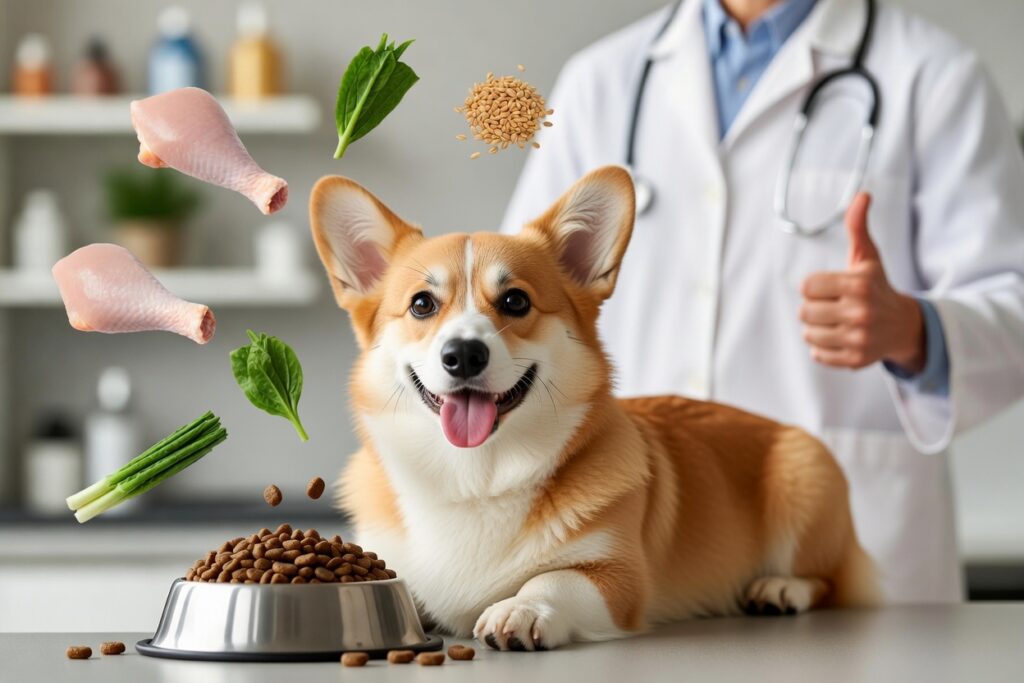
The bag in your hand says “vet recommended”. Which vet? Recommended over what? It does not say - and legally, it does not have to. There is no UK law defining the phrase, no register a brand has to be on, and no proof required to print it. That does not make it meaningless. It makes it a starting point for your own reading, not the end of the decision.
This guide untangles what “vet recommended” actually covers, when it genuinely matters, and how to judge any food the way a good vet would tell you to: on what is in it. Every food in our directory is scored on exactly that, by an algorithm we publish in full - recommended by data, not by an advertising budget.
The three different things “vet recommended” can mean
The phrase gets used loosely, so it helps to separate what is behind it:
- A genuine clinical recommendation. Your own vet, who has examined your dog, suggests a specific food for a specific reason. This is the gold standard - it is personal, informed and worth following.
- A prescription (veterinary) diet. A food formulated for a diagnosed condition - kidney, liver, urinary, weight - and fed under supervision. A real clinical tool, and the reason we do not score these against our normal scale: they are medicine, not everyday food.
- A marketing badge. “Vet recommended” printed on the pack with no named vet, no study and no detail. This is the version to be sceptical of - it is a claim about perception, not contents.
Prescription diets: the one version that IS defined in law
Here is the distinction almost every article on this topic misses. “Vet recommended” is unregulated - but the veterinary diet is not. Foods sold for a “particular nutritional purpose” sit under their own EU-derived regulation, retained in UK law, which sets out a defined list of purposes a dietetic food may be sold for (reduction of struvite stones, support of renal function in chronic insufficiency, and so on), along with what the label must declare and a recommendation to seek veterinary opinion before use[1].
So the words on the bag are doing two completely different jobs. A dietetic claim has a legal definition behind it and a purpose it must match. A “vet recommended” flash has neither. Same shelf, same reassuring tone, entirely different amount of proof - which is exactly why we treat clinical diets as a separate category and never rank them against ordinary food.
Why vets point at the label, not the logo
Ask a vet what makes a good everyday food and you will rarely hear a brand name first. You will hear principles: a named animal protein high on the list, a complete and balanced recipe for the dog’s life stage, a clear analysis, and nothing added just to sell it. Those are judgements you can make yourself from the back of the bag - and the ones our score is built on.
The label terms that cost a food points
Those principles are not folklore. UK and European pet food is governed by labelling rules that dictate how ingredients may be grouped and what a “complete” food must deliver[2] - which is precisely why the vague catch-all categories are legal, common, and worth spotting. The terms a vet would steer you away from are the same ones that cost points on our score. We spell them all out in ingredients to avoid, in how to read a dog food label, and in the ingredient glossary.
The most common offenders look like this on a label:Meat and animal derivativesThe vaguest term on any UK label - it can mean almost any animal part from almost any species, and the recipe can change batch to batch.Cereals (unspecified)Which cereals?Artificial coloursDye for the human buying the food - your dog cannot see the pretty colours and did not ask for the additives behind them.
The five questions vets actually ask brands
If you want the genuinely professional version of “vet recommended”, it is not a badge at all - it is a short interrogation of the manufacturer. The World Small Animal Veterinary Association publishes exactly this set for owners and clinics to use when assessing any pet food company[3]:
- Do they employ a qualified nutritionist? A full-time veterinary nutritionist or a PhD in animal nutrition - not a “pet nutrition consultant” with a weekend certificate.
- Who actually formulates the recipes, and what are their credentials?
- Are the foods tested by feeding trials, or only calculated on paper to meet a nutrient profile?
- What quality control do they run on ingredients and finished batches?
- Will they give you a full nutrient analysis for a specific product if you ask?
What to do with the answers
Email those five questions to any brand that prints “vet recommended” on its bag. The answers - and the speed of them - tell you more than the phrase ever will. Note that a small brand can answer all five well, and a large one can dodge them; this is about evidence, not size.
Foods that score well on the things vets care about
You do not need us to tell you which brand to buy - you need to see which foods actually meet the standard. These are currently the highest-scoring complete foods in our directory, rated purely on ingredients and nutrition:
| Rank | Food | Type | ODF Score | Per day |
|---|---|---|---|---|
| 1 | Different DogDifferent Dog Health+ Keep Me Trim Turkey | Fresh-cooked | 94/100 | £4.83 approx. |
| 2 | Different DogDifferent Dog Health+ Low Purine & Phosphorus | Fresh-cooked | 94/100 | £4.67 approx. |
| 3 | Different DogDifferent Dog Health+ Stay Supple Fish Supper | Fresh-cooked | 94/100 | £5.28 approx. |
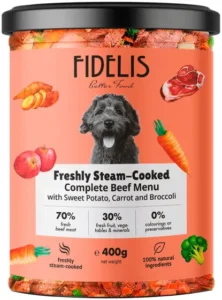
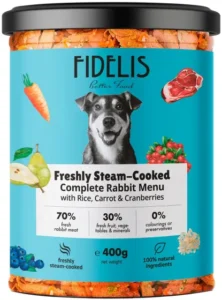
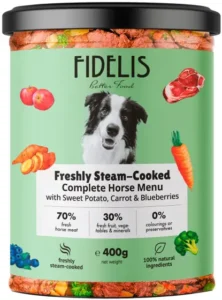
| 4 | FidelisFidelis Fresh Menu (grain free recipes) | Fresh-cooked | 94/100 | £3.71 approx. |
| 5 | FidelisFidelis Fresh Menu (grain inclusive recipes) | Fresh-cooked | 94/100 | £3.56 approx. |
| 6 | FidelisFidelis Fresh Menu (novel protein recipes) | Fresh-cooked | 94/100 | £4.62 approx. |
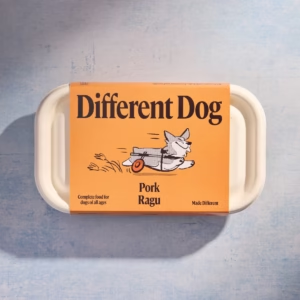
| 7 | Different DogDifferent Dog Pork Ragu | Fresh-cooked | 93/100 | Price coming soon |
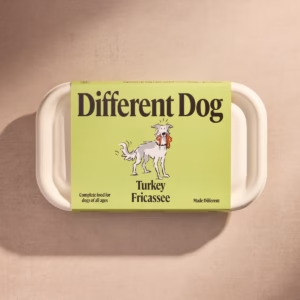
| 8 | Different DogDifferent Dog Turkey Fricassee | Fresh-cooked | 93/100 | Price coming soon |
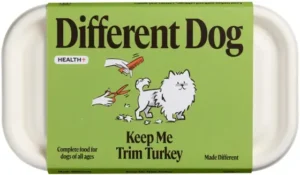
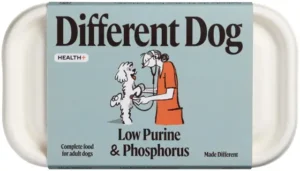
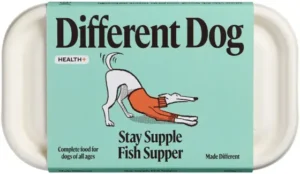
Live data - this table updates itself as we rate foods and track prices.
We have scored 3,075 foods this way so far. None of it is sponsored, and the ranking reorders itself as recipes change - the opposite of a fixed “recommended” badge.
Why won’t my vet just name a brand?
The question everyone actually wants answered. You ask at the end of a consultation, and you get principles instead of a product - it can feel like a dodge. It mostly is not. Three honest reasons:
- Dogs genuinely differ. The food your neighbour’s collie thrives on can sit badly with your spaniel. A vet naming one brand for every dog in the waiting room would be doing marketing, not medicine.
- The evidence base is thinner than anyone admits. Head-to-head feeding studies between everyday brands barely exist, so an honest professional has very little to certify one bag over another with.
- Naming names has a cost. A clinic that recommends a specific brand is one Google review away from “they are paid to say that” - especially if the practice also sells food. Teaching you to read a label is advice nobody can accuse of being sponsored.
Which is exactly the gap this site exists to fill: the principles vets teach, applied mechanically to every label in the shop, with the working shown. Not a recommendation - a ranking you can check.
When you really should ask your vet
For a healthy adult dog, choosing a good everyday food is something you can do confidently from the label. But some situations genuinely call for professional advice, and no website should replace it:
- A diagnosed condition - kidney, liver, pancreatitis, diabetes, urinary problems - where a prescription diet may be needed.
- Ongoing digestive trouble, itching or weight problems that do not settle. Start with foods for sensitive stomachs, but see a vet if it persists.
- Puppies, seniors or pregnant dogs with specific needs, where getting the nutrient balance wrong has lasting consequences.
- Any home-cooked or raw diet you intend to feed long term, which needs formulating properly rather than guessing.
In every other case, the best “recommendation” is a food that can show its working. That is the whole point of an open score: you never have to take the word “recommended” on trust. Start with the directory, sort by score, and read the label of anything that catches your eye - the bag has to earn it.
What dog food do vets actually recommend?
There is no single vet-recommended food - it depends on your individual dog. Vets most often point owners towards complete foods with named proteins, a clear analysis and no unnecessary additives, and towards prescription diets only when a dog has a diagnosed condition. The label matters more than the marketing.
Is 'vet recommended' on a bag a regulated claim?
No. 'Vet recommended', 'vet approved' and 'recommended by vets' are marketing phrases with no legal definition in the UK. A brand can print them without proving anything, so treat them as a prompt to read the ingredients, not as evidence on their own.
What is a prescription or veterinary diet?
A prescription (veterinary) diet is a food formulated for a specific medical condition, fed under veterinary supervision. Unlike 'vet recommended', this category is genuinely defined in law, with a set list of nutritional purposes a food may claim. It is a clinical tool, not a general recommendation - which is why we do not score veterinary diets against our normal 0-100 scale.
What questions should I ask a dog food brand?
The internationally recognised set comes from WSAVA: does the company employ a qualified nutritionist, who formulates the food, are the recipes tested by feeding trials, what quality control is in place, and can they give you a full nutrient analysis. A brand that answers all five is doing the work; one that dodges them is selling a bag.
How do I choose a good food without a vet?
Read the composition list: a named animal protein near the top, a short readable ingredient list, and no vague catch-alls or artificial additives. Our directory scores every food on exactly that, so you can compare on substance. For any health condition, still speak to your vet.
Sources
This is label analysis, not veterinary advice - if your dog has a health condition, talk to your vet before switching foods.