
Insect protein dog food: sustainable, but is it any good?
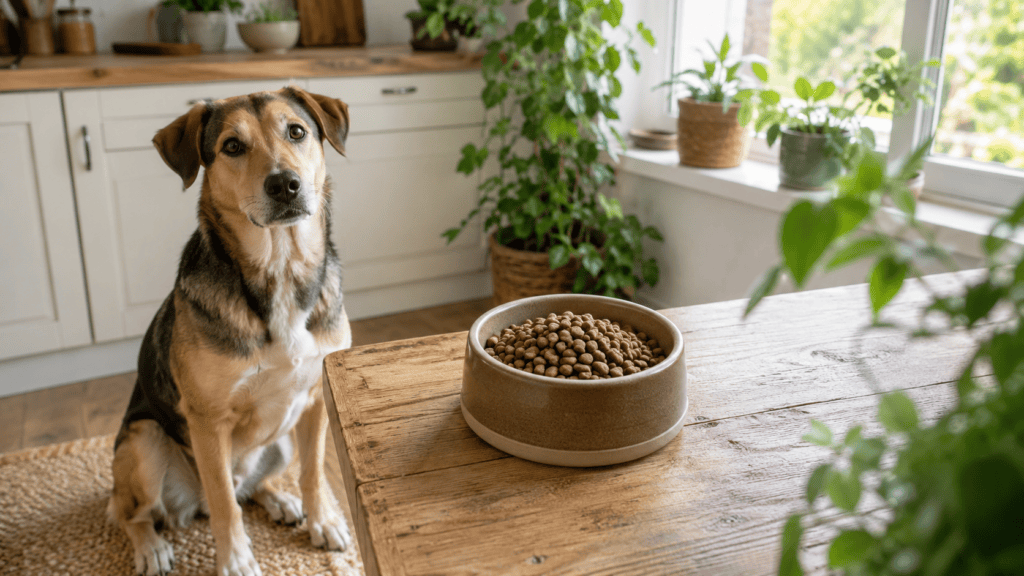
Insect protein is the most genuinely interesting thing to happen to dog food in years, and the environmental arithmetic behind it is remarkable. So it would be convenient if our scores backed it up. They do not - not yet - and it is worth explaining exactly why, because the reason is not the insect.
The environmental case, which is the strong one
Almost all insect protein in dog food comes from black soldier fly larvae. They are farmed vertically, indoors, on food waste, and reach harvest weight in around two weeks.
Against conventional livestock that produces striking numbers: dramatically less land, far less water, a small fraction of the greenhouse gas per kilogram of protein, and no requirement for new agricultural land - the vertical farms sit in warehouses. Because the larvae are raised on food that would otherwise be waste, the system also diverts something from landfill rather than consuming fresh crops.
Pet food is a real environmental footprint - a meaningful share of global meat production goes into it - so this is not a token gesture. If reducing that footprint is what you are buying, insect protein delivers it.
What our scores actually show
Here is where we have to be straight with you. Across the few dozen insect-protein foods we currently rate (figures checked August 2026):
- 19% score 80 or above - against a third of adult foods
- Median score 76 - a touch above the adult median of 74, but with far fewer stand-out recipes
- Median cost around £1.66 a day - against £1.16 across the catalogue
Ordinary on quality, above average on price, and short on genuinely excellent recipes. That is not the result the category’s marketing implies, and we are not going to hide it because the story is otherwise appealing.
Why they score as they do - it is not the insect
Insect protein itself rates well with us. It is a named, specific, complete protein with a good amino acid profile, and it is highly digestible. On its own terms it is a good ingredient.Insect proteinFarmed insect protein - digestible, sustainable and hypoallergenic for most dogs.Cereals (unspecified)Which cereals?MaizeMaize is not the villain some sites make out, but it is not doing your dog favours either - a cheap energy source that lets a recipe hit its numbers inexpensively.Beet pulpThe fibre left after sugar extraction from beets - the sugar is gone, despite the name.
So the fair conclusion is not “insect protein is worse”. It is that the current generation of recipes built around it is more mixed than the marketing suggests, and you have to read them individually - exactly as you would any other food.
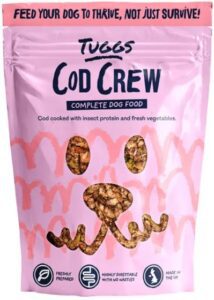
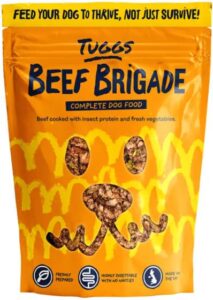
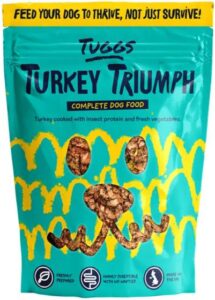
The ones that do clear 80 tend to be the ones that treat insect as the protein in a genuinely well-built recipe rather than as the headline on an ordinary one. These are the current leaders - live, so the list updates as the category grows:
Where it is genuinely compelling: novel protein
This is the strongest practical argument, and it gets less attention than the sustainability angle.
Food allergies in dogs are usually to proteins they have eaten a great deal of - chicken, beef, dairy, lamb. Almost no dog has ever eaten insect protein, so almost no dog has been sensitised to it. That makes it a legitimately useful option for an elimination diet, alongside duck, venison or a hydrolysed veterinary diet.
Our sensitive stomach guide covers how an elimination diet actually works - it is stricter and slower than most people expect, and choosing the protein is the easy part.
Will dogs actually eat it?
Generally, yes, and with noticeably less fuss than their owners expect. Insect-based foods have a mild, slightly nutty smell rather than a strong meaty one, which some dogs take a moment to adjust to. Fussy eaters may need a slower transition - our switching guide has the ratios.
The squeamishness is entirely ours. Dogs have no opinion about the taxonomy of their dinner.
So should you buy it?
Yes, if: the environmental case matters to you and you pick a well-scored product; or you need a novel protein for an elimination diet.
Not necessarily, if: you are buying it purely expecting better nutrition. On today’s data you can get a higher-scoring food for less money, and our cost guide shows 62 foods clearing 80 for under £1 a day.
The category is young and improving quickly. We will keep scoring it the same way we score everything else, and if the numbers move, this page will say so.
Where to go next
- Browse every insect-protein food we rate and sort by score - the spread is wide, so this is worth doing rather than picking blind
- Hypoallergenic foods, if the novel-protein angle is why you are here
- How to read the rest of the label - which, in this category particularly, is where the difference lives
Is insect protein good for dogs?
It is a complete, highly digestible protein and dogs generally do well on it. But on our scoring, insect foods have far fewer stand-out recipes than the catalogue average - roughly one in five reaches 80 against a third of adult foods - because many pair the insect protein with a fairly ordinary rest-of-recipe. The protein source is sound; the recipes built around it vary a lot.
Why is insect protein more sustainable?
Black soldier fly larvae are farmed vertically on food waste, reaching slaughter weight in around two weeks. Compared with conventional livestock they use dramatically less land and water, produce far less greenhouse gas per kilogram of protein, and need no new agricultural land.
Is insect protein good for dogs with allergies?
Potentially, yes - it is a genuinely novel protein, so a dog that has reacted to chicken, beef or lamb is very unlikely to have been sensitised to insect. That makes it a legitimate option for an elimination diet. It is not hypoallergenic in itself; nothing is.
Which insects are used in dog food?
Almost always black soldier fly larvae, sometimes mealworm or cricket. Black soldier fly dominates because it converts food waste efficiently, is easy to farm at scale, and produces a protein and fat profile that works well in pet food.
Is insect protein dog food expensive?
It typically costs noticeably more per day than the catalogue median - dearer than average dry food, though cheaper than raw or fresh. Prices are falling as production scales, but there is currently an early-adopter premium.
This is label analysis, not veterinary advice - if your dog has a health condition, talk to your vet before switching foods.