
Is grain-free dog food bad for dogs?
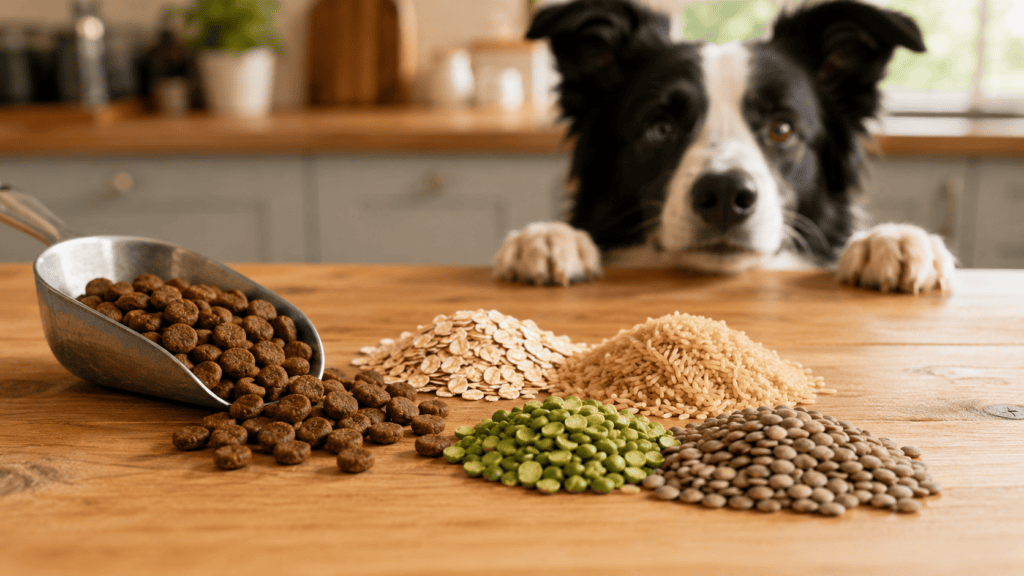
Grain-free food scores better in our data. Considerably better - a median of 81 against 66 for grain-inclusive (checked August 2026). But before you read that as “grains are bad”, the same grain-free foods also declare over half again as much meat (and, yes, cost around 65% more per day). The score gap is mostly telling you about the recipe, not about grain - our score rewards the extra named meat and the cleaner labels, never the higher price.
What our data actually shows
Across the catalogue, split by whether a food contains grain:
- Grain-free: 56% score 80 or above, median score 81, median cost £1.56 a day, median declared meat 42%.
- Grain-inclusive: 18% score 80 or above, median score 66, median cost £0.95 a day, median declared meat 26%.
That is across 3,075 scored foods (figures checked August 2026), so it is not a small sample. But it looks decisive only until you notice the last two figures. Grain-free foods declare well over half again as much meat and cost about two-thirds more. Our open score rewards named meat, short ingredient lists and the absence of vague catch-all terms - all things premium foods do, grain or no grain.
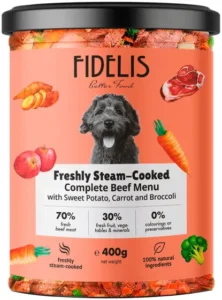
These are the current top grain-free scorers - a live list that re-ranks itself as we rate more:
Put plainly: we are largely measuring the recipe, not the grain. A grain-inclusive food built to the same standard - named meat, clear labelling - scores just as well, and there are plenty in the directory that do.
We could have left that caveat out and let the number do the talking. It would have made a better advert and a worse answer.
The DCM question, honestly
This is why people search for this in the first place, so it deserves a straight account rather than a reassuring one.
In 2018 the US Food and Drug Administration announced it was investigating reports of dilated cardiomyopathy - a serious condition where the heart muscle weakens and enlarges - in breeds not usually prone to it. Many of the dogs had been eating grain-free diets, often ones high in peas and lentils. [1]
What has happened since matters as much as the original alert:
- No causal mechanism has been established. Years of investigation have not produced one.
- The focus narrowed away from grain. Attention moved towards pulse-heavy formulations generally - the legumes replacing the grain, rather than the missing grain itself.
- Reporting was voluntary and heavily publicised, which inflates apparent case numbers in exactly the foods being discussed.
- No recall was issued, and the FDA has repeatedly described the relationship as complex and unproven.
So: a genuine signal worth taking seriously, never demonstrated as cause and effect, and probably never really about grain. Anyone telling you grain-free food causes heart disease is ahead of the evidence. So is anyone telling you the question was nonsense.
What grains actually do in dog food
Dogs are not wolves, and they are not strict carnivores. Domestication left them considerably better at digesting starch - the extra copies of the amylase gene are one of the clearest genetic signatures of living alongside us.
Whole grains supply energy, fibre and some micronutrients cheaply. The reasonable criticism is not that grain is poison; it is that grain is cheap, and some manufacturers lean on it to displace meat. That is a quantity problem, and it shows up in the ingredient list.
Here is how the common ones rate, and why:Brown riceRice with the bran left on - a little more fibre and minerals than white rice, equally digestible for most dogs.OatsOne of the better grains - good soluble fibre, gentle on digestion, honestly named.BarleyA solid named wholegrain with decent fibre.MaizeMaize is not the villain some sites make out, but it is not doing your dog favours either - a cheap energy source that lets a recipe hit its numbers inexpensively.WheatA cheap named grain and one of the more common canine intolerances.Cereals (unspecified)Which cereals?
Note the spread. A named whole grain and an unnamed “cereals” entry are not the same thing at all - the first tells you what your dog is eating, the second tells you a grain is present but not which one, or how much.
Which is the useful move here: stop asking whether a food has grain, and start asking what fraction of it is named meat.
When grain-free genuinely makes sense
- A diagnosed grain allergy or intolerance. Real, but much rarer than the shelf space implies - dogs react far more often to a protein than to a grain.
- Elimination diets. When you are trying to identify a trigger, fewer ingredients means fewer variables. That is about diagnosability, not grain being harmful.
- It is simply the best food you can afford. Perfectly good reason. Buy the better food, not the label.
Worth knowing: every single food we flag hypoallergenic is also grain-free. If your dog needs a limited-ingredient diet you will end up in grain-free territory regardless - not because the grain was the problem, but because that is how those recipes are built. Our hypoallergenic ranking is the place to start if that is you.
The grain-free foods that are not actually better
Removing grain does not automatically improve a recipe. The starch has to come from somewhere, and in cheaper grain-free foods it comes from potato, tapioca or a large helping of pea protein - the last of which inflates the protein figure without contributing any meat:PotatoA gluten-free starch - clean energy, modest nutrition.TapiocaA gluten-free starch from cassava root - clean energy and a kibble binder, with next to no other nutrition.Pea proteinConcentrated pea protein - a plant-based protein number booster.Meat and animal derivativesThe vaguest term on any UK label - it can mean almost any animal part from almost any species, and the recipe can change batch to batch.
That last one is the point. A food can be grain-free, expensive, and still declare its meat in the vaguest terms available. The label tells you; the marketing does not. Our ingredients to avoid guide covers what costs points and why.
How to actually judge a food
Whether or not it contains grain, the same four questions apply:
- Is the meat named and quantified? “Chicken 45%” is information. “Meat and animal derivatives 4%” is not.
- Where does the meat sit in the list? Ingredients are listed by weight before cooking, so first place matters - and fresh meat is weighed wet.
- Is anything vague? Unnamed derivatives, “oils and fats” and “EC permitted additives” all hide what you are buying.
- Does it suit your dog? Coat, stools, energy and weight tell you more than any label.
Our label guide walks through the terminology in full.
The bottom line
Grain-free is not bad for dogs. It is not better for dogs either, in itself. It is a category containing a lot of expensive, well-made food, and our scores reflect the “well-made” part rather than the “grain-free” part.
Buy on ingredient quality and on what your dog does well on. If that food happens to have rice in it, you have not made a mistake.
Where to go next
- The best grain-free dog food - top 10, ranked
- Browse every grain-free food we rate and filter by protein, life stage or price
- The full directory, if you would rather ignore the category entirely and just sort by score
Is grain-free dog food bad for dogs?
There is no good evidence that it is. The FDA's 2018 investigation into dilated cardiomyopathy found an association in reported cases but never established cause, and attention has since shifted towards pulse-heavy recipes rather than the absence of grain. For most dogs grain-free is neither necessary nor harmful.
Why does grain-free score higher on OnlyDogFood?
Mostly the recipe, not the grain. Grain-free foods sit well above grain-inclusive ones at the median, and they declare over half again as much meat. Our score rewards that named meat and clear labelling, which premium foods do whether or not they contain grain. They also cost about 65 percent more per day, but that price earns no points - the meat does.
Does my dog need grain-free food?
Only if they have a diagnosed grain allergy or intolerance, or you are running an elimination diet where fewer ingredients make a trigger easier to identify. Protein reactions are far more common in dogs than grain reactions.
What is the link between grain-free food and DCM?
An association reported to the FDA from 2018 onwards, never shown to be causal. No mechanism has been identified, no recall was issued, and the focus moved towards diets high in peas and lentils rather than grain-free diets specifically. If your breed carries DCM risk, discuss it with your vet.
Are grains just cheap filler in dog food?
Sometimes, but not inherently. Dogs digest starch considerably better than wolves do, and whole grains provide energy and fibre. The real problem is when cheap ingredients displace meat - and that shows up in the ingredient list, not in the presence of grain itself.
Sources
This is label analysis, not veterinary advice - if your dog has a health condition, talk to your vet before switching foods.