
What does “natural” actually mean on a dog food label?
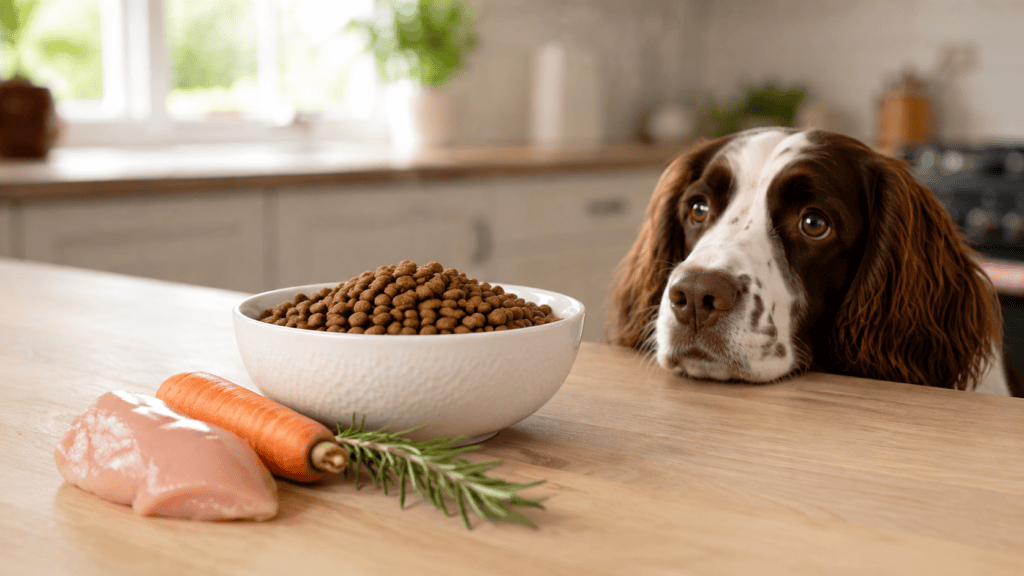
“Natural” is the least regulated word on a dog food bag. There is no definition of it in UK or EU pet food law, no test a product has to pass, and no penalty for putting it on a recipe full of artificial additives. It costs a manufacturer nothing to claim, which is precisely why almost everyone does.
What the law actually says
Very little. Pet food labelling in the UK and EU is governed by rules covering what must be declared - the composition, the analytical constituents, additives, the feeding guide. Those rules are reasonably strict about the facts on the back of the bag.
They say almost nothing about the marketing on the front. “Natural”, “premium”, “holistic”, “wholesome”, “ancestral” and “human-grade” are not defined terms. No test, no threshold, no enforcement.
Compare that with a claim like “with chicken”, which is defined: it requires only about 4% chicken, but at least that number means something. “Natural” has no number behind it at all.
So we defined it ourselves
Rather than repeat a claim we cannot verify, we derive the flag from the label. A food is flagged natural in our data only if both of these hold:
- No artificial colours, flavours or preservatives are declared.
- No vague derivative categories are used in place of named ingredients.
That second condition is the one that does the unexpected work, and it is worth explaining. A recipe can be entirely free of artificial additives while still refusing to tell you what is in it. “Meat and animal derivatives” contains nothing artificial - it just declines to say which animal, which part, or in what proportion, and the mix can change between batches.
We do not think a food that hides its ingredients should be called natural. So our test requires transparency as well as the absence of additives.
These are the terms that fail it:Artificial coloursDye for the human buying the food - your dog cannot see the pretty colours and did not ask for the additives behind them.Artificial flavoursSynthetic taste - decent food does not need to fake its flavour.BHA (E320)An artificial preservative classified as a possible carcinogen and banned from many human foods.BHT (E321)BHA's chemical sibling - an artificial preservative with the same cloud over it and the same natural alternatives available.EthoxyquinA preservative developed as a pesticide, suspended from EU food use.Meat and animal derivativesThe vaguest term on any UK label - it can mean almost any animal part from almost any species, and the recipe can change batch to batch.Derivatives of vegetable originA catch-all for plant by-products - could be decent fibre, could be floor sweepings from milling.
The full list, with our reasoning for each, is in the ingredients A-Z. The same test runs identically across every food we hold - no exceptions, no editorial discretion, no brand relationships.
What the test found
Across the complete foods we rate (checked August 2026):
- Roughly three quarters qualify as natural
- 45.7% of those score 80 or above, against 34.3% for the catalogue as a whole
- Median score 78, median cost around £1.21 a day
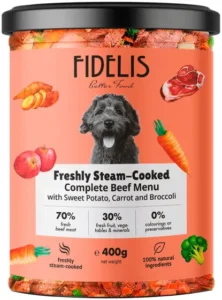
And these are the foods currently sitting at the top of that group - a live list, so it re-ranks itself as we rate more:
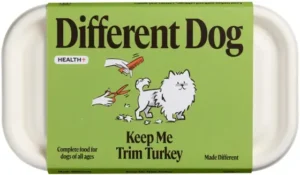
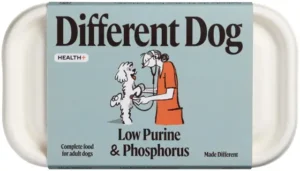
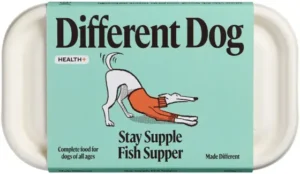
Two honest conclusions from the numbers.
First, natural foods do score better on average, and the flag is a genuine signal. Second - and this is the part the packaging will not tell you - most foods qualify. It is not an elite category. If you are paying a premium specifically for the word, you are paying for something three quarters of the shelf already does.
What “natural” does not tell you
This is the important limitation, and we would rather state it than let the badge do more work than it can carry.
A food can pass our natural test completely and still be a mediocre food. Nothing in the definition requires meat content, protein quality, or a sensible recipe. A product built largely on unnamed-but-not-artificial bulk, with a modest amount of named meat, passes.
That is why natural is one input to our score rather than the score itself. Our scoring methodology weighs ingredient quality, declared meat, labelling clarity, additives, nutritional balance and processing - all published, all mechanical.
Natural does not mean unpreserved
Worth being clear about, because the two get conflated and the confusion is genuinely unhelpful.
Fat goes rancid. A dry food with no preservative system at all would spoil quickly, and rancid fat is a real health risk rather than a theoretical one. Preservation is not the enemy.
The meaningful distinction is which preservative. Natural options - mixed tocopherols (vitamin E compounds), rosemary extract, citric acid - are effective, though they give a shorter shelf life. The artificial ones our test flags are BHA, BHT and ethoxyquin, all of which have attracted enough safety debate that a manufacturer choosing them is making a cost decision rather than a quality one.
A shorter best-before date on a naturally preserved food is a feature, not a defect.
The other words on the bag
While we are here, none of these are defined either:
- Premium / super-premium: no definition, no threshold. Pure positioning.
- Holistic: no meaning in pet food whatsoever.
- Human-grade: occasionally meaningful if it refers to a facility’s certification, usually not.
- Ancestral / biologically appropriate: marketing framings, not standards.
- No fillers: “filler” has no definition, so neither does its absence.
The reliable information is always on the back: the composition list, the percentages, the analytical constituents. Our label guide covers how to read it in about sixty seconds, and ingredients to avoid covers what costs points and why.
How to use this
Treat natural as a filter, not a verdict. Start with foods that pass the test, then judge them on the things that actually vary: named meat and how much of it, protein quality, and price per day.
A high-scoring natural food is a good buy. A natural food with 18% unnamed-source protein is a food with a nice word on the bag.
Where to go next
- The best natural dog food - top 10, ranked
- Browse every food that passes the test, sorted by score
- The ingredients A-Z - every ingredient we track, rated, with the reasoning
What does natural dog food actually mean?
Legally, nothing. There is no definition of natural in UK or EU pet food law, no test a product must pass and no penalty for using the word loosely. Any food can carry it. We apply our own mechanical test instead: no artificial colours, flavours or preservatives, and no vague derivative categories on the label.
Is natural dog food better for dogs?
It is better labelled, which is related but not identical. Avoiding artificial additives and unnamed derivatives is a genuine positive and tends to indicate a more transparent recipe overall. But a food can be free of every artificial ingredient and still be short on meat, so treat it as one signal among several.
How many dog foods count as natural?
On our test, roughly three quarters of the complete foods we score qualify, and nearly half of those reach 80 or above. It is a meaningful filter rather than a rare badge, which is worth knowing before you pay a premium for the word.
Are artificial additives in dog food dangerous?
Permitted additives are assessed for safety, so the issue is less acute harm and more what their presence signals. Artificial colours are the clearest example: dogs do not choose food by appearance, so a colourant exists purely for the person buying the bag.
Does natural mean no preservatives at all?
No, and it should not. Fats go rancid, and an unpreserved food would be a genuine health risk. The distinction is between natural preservatives such as tocopherols, which are vitamin E compounds, and artificial ones like BHA, BHT and ethoxyquin. Our test allows the former and flags the latter.
This is label analysis, not veterinary advice - if your dog has a health condition, talk to your vet before switching foods.